
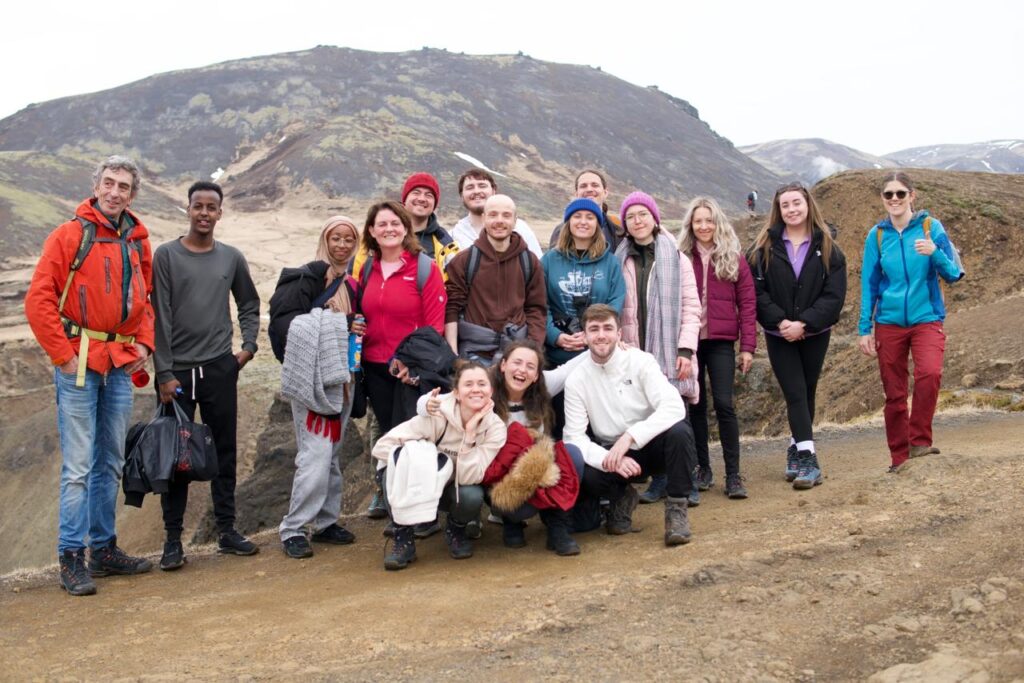
My trip to Iceland in April, participating in the “Inside Out” training course, was a life-changing journey of self-discovery, cultural exchange, and hands-on learning. As part of an initiative organized by three partner organizations from Ireland (Eurobug), Germany (Culture Goes Europe e.V.), and Iceland (The Opportunity), we jumped into outdoor education, embraced teamwork, and explored Iceland’s breathtaking landscapes, all while connecting with people from various cultural backgrounds.

Building soft and hard skills through nature-based learning
One of the highlights was the unique approach to education, blending teamwork and teambuilding activities that focused on improving soft skills like communication, resilience, and decision-making. In our group, which consisted of youth from Ireland, Germany, and Iceland, each day was a mix of challenges designed to strengthen both our individual and collective abilities. We navigated complex outdoor terrains together, relying on clear communication and mutual support, essential skills for any team but especially valuable in the wilderness.
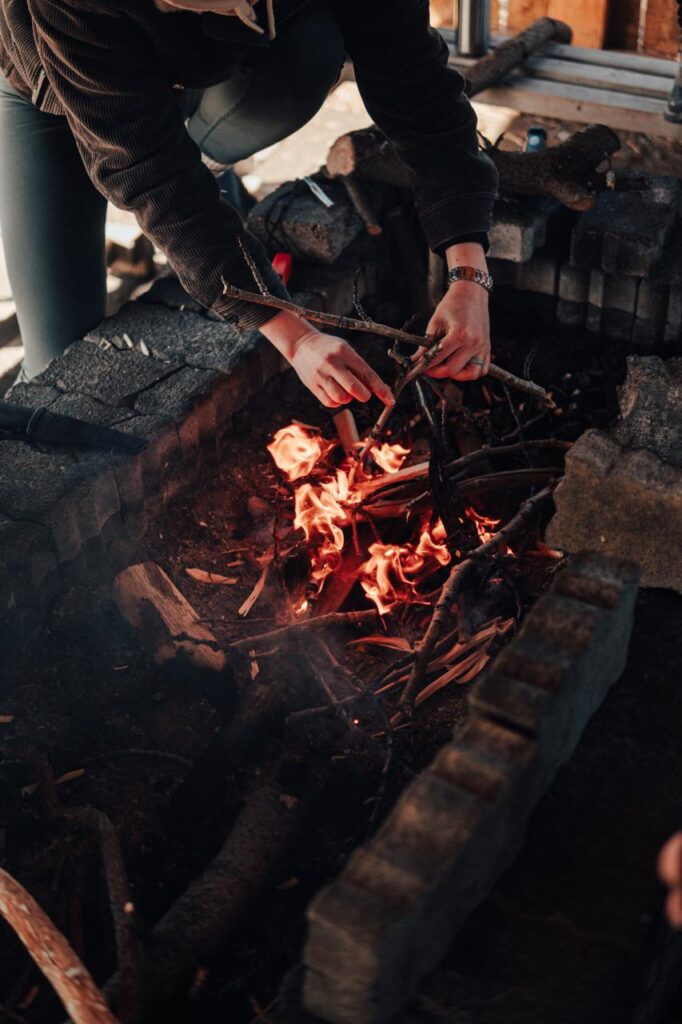
On the technical side, we learned practical skills that many of us had never tried before. Fire-making, knot-tying, and using GPS devices became the backbone of our outdoor sessions, bridging the gap between survival skills and personal growth.
The joys of an intercultural group and those who made it special
Regarding the amazing group that formed, despite being from just three countries, our group was culturally diverse, with participants bringing unique perspectives and traditions that enriched every aspect of the experience. I learned so much about different customs, languages, and viewpoints, each one broadening my understanding of the world. This international element turned our mobility into a true intercultural exchange, allowing us to see how varied our backgrounds were and yet how similar our aspirations and challenges are.
Three incredible people helped shape our experience. Bjork, our host and coordinator, was an inspiring presence. Always ready to help and spreading joy with her laughter, she became the soul of our group. Her culinary skills were legendary, and her warmth and energy made every meal feel like home. Whether it was answering questions, sharing local tips, or encouraging us in challenging moments, Bjork was a constant source of support and positivity.
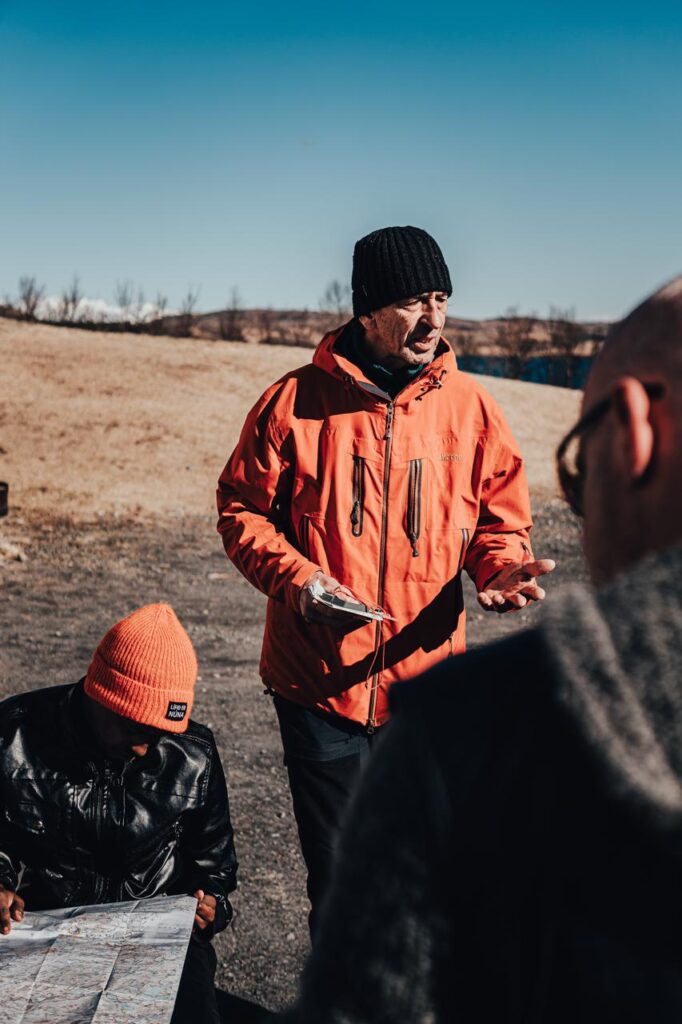
Gerrit, our main outdoor trainer, brought a wealth of experience from his years with Outrac. His approach to education was both challenging and rewarding, blending old-school methods with hands-on activities that made learning hard and soft skills engaging and unforgettable. His expertise and motivational style kept everyone focused and enthusiastic, whether we were learning to make fires or practicing essential knots.
Finally, Inga, a local trainer from Iceland, helped us discover the beauty and depth of Icelandic culture. She was our guide around Úlfljótsvatn and Reykjavik, sharing insights into the landscapes, history, and customs that surrounded us. Her knowledge added layers of meaning to our hikes and visits, connecting us deeply to the environment and helping us understand Iceland from a local perspective.
Immersed in Iceland’s natural beauty
Iceland itself became an unforgettable part of the learning journey. We traveled to iconic locations—the geysers that burst with stunning force, the soothing hot springs, and the moss-covered landscapes that play a crucial role in Iceland’s biodiversity. Our hikes took us past majestic waterfalls, each one more inspiring than the last, reminding us of the raw power and beauty of nature. A particularly memorable moment was visiting the birthplace of the Viking parliament, nestled between two tectonic plates. Standing in that ancient site, steeped in history, connected us to something larger than ourselves.
Learning from Iceland’s Fragile Ecosystems
The German cohort of participants took the initiative to organize a guided hike, a deliberate effort to deepen their connection with Iceland’s nature and to engage more fully with the local biodiversity – an especially fitting pursuit given that most among them belonged to the PLANET4B Learning Community. Their path wound through stark yet subtle landscapes, where the absence of abundant species stood in sharp contrast to expectations shaped by more temperate climates. This scarcity wasn’t just noticed; it provoked wonder and curiosity. The moss, in its quiet unassuming carpets, became a point of fascination: how it thrives in the cold, how it holds moisture, how it contributes to soil formation in ways quite different from what many had learned in class. Participants paused to peer at lichens adhering to volcanic rock, to inspect the few flowering plants clinging to gravel, to observe insects moving slowly in the chill, and they asked: What adaptations make these life-forms possible here? What ecological processes are at work under the thin layer of soil, under knit layers of moss, under constant exposure to wind and cold? Through this immersive encounter with landscape, the hike became more than just walking: it was a laboratory for sensory learning, for probing environmental questions. It inspired a hunger for further inquiry – to read more, to ask more, to understand more deeply about cold‐climate ecology, about resilience, about how humans relate to these fragile systems. In short, the outing didn’t just show them Iceland’s biodiversity – it propelled them toward wanting to become part of its conversation.
From traversing rugged landscapes to witnessing Iceland’s awe-inspiring natural beauty, every moment was a reminder of why outdoor education is so impactful. It combines learning with the joy of exploration, the thrill of discovery, and the peace found only in nature. The Inside Out project was more than just a trip; it was a chance to grow, connect, and be inspired by nature and the people around us. This project wasn’t just about education; it was about transformation.

This project (P.Nº: 2023-1-IS01-KA210-YOU-000160096) is co-funded by the European Union through the Erasmus+ program. Its consortium is assembled by Culture Goes Europe e.V. from Germany, Eurobug from Ireland, and The Opportunity from Iceland.