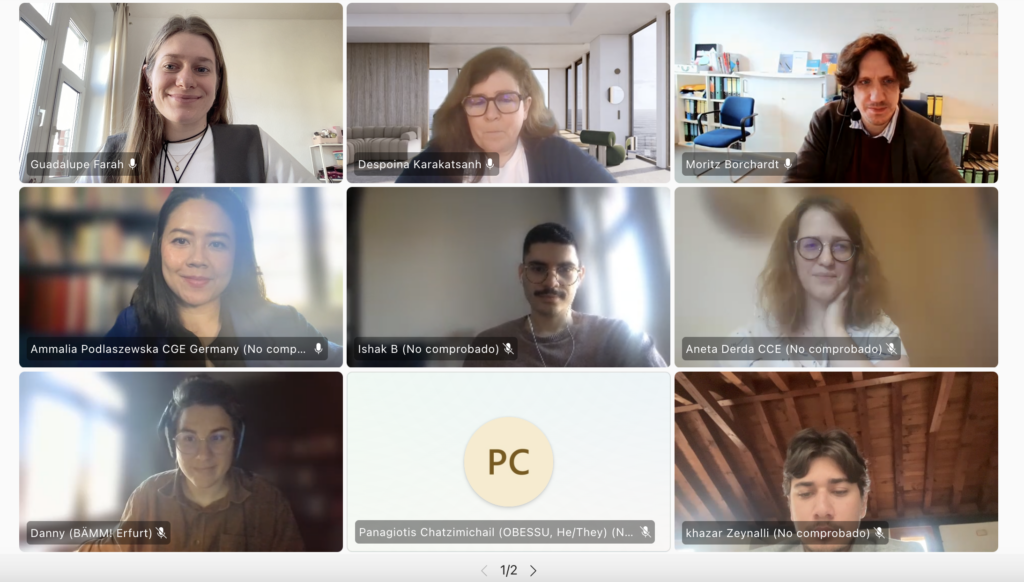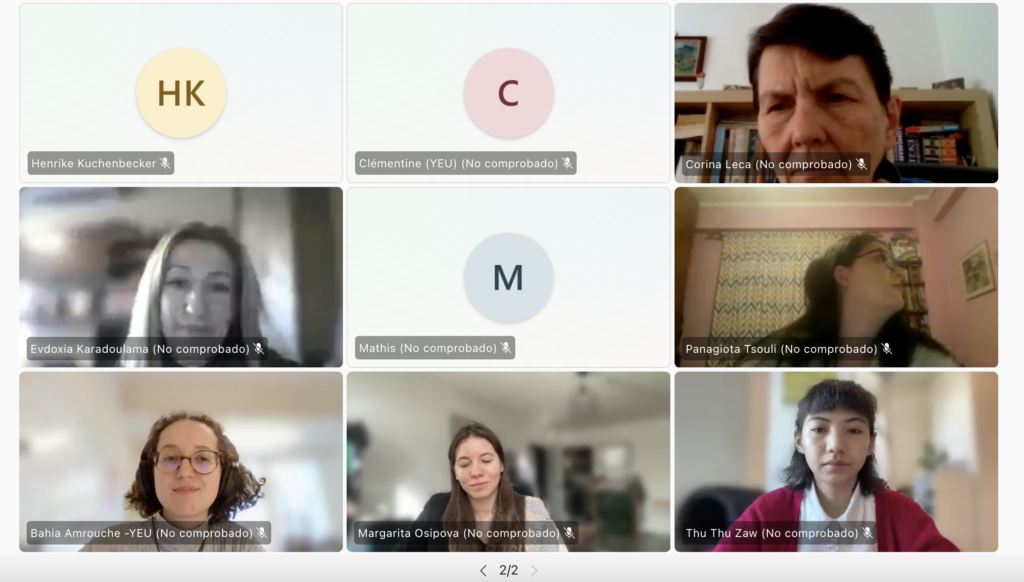
On the 27th of February, we had the pleasure of co-hosting a webinar and network event with the DARE Network, and it turned out to be one of those sessions that leaves you feeling both inspired and thoughtfully challenged. We gathered a wonderful mix of professionals, community actors, and NGO representatives, all of whom share a passion for a topic that deserves more spotlight: the intersection of Civic Education and Vocational Education and Training (VET). To give our conversation some solid grounding, we dove into the findings and outputs from the projects Civics in VET (CGE) and CoCivic (KulturLife).
Dr. Ammalia Podlaszewska, chairwoman of CGE, kicked things off by introducing the Civics in VET project and its main goal: strengthening civic education in VET schools, not just to turn students into skilled workers, but to help them become active, thoughtful and empowered citizens in a democratic society. Research conducted with students, teachers, and youth workers revealed several important insights. Students show strong interest in topics such as labour rights, anti-discrimination policies, and mental well-being, yet many do not feel comfortable enough to express their political views in classrooms, worrying about being judged or confronted by their peers. On top of that, they often find the teaching methods outdated and disconnected from their realities, craving more outdoor learning, more practical materials. Teachers, on the other hand, recognize the importance of civic education but frequently lack time, resources, and institutional support, as many activities take place outside regular school hours, which means teachers are putting in extra time and energy without feeling appreciated or fairly compensated. At the same time, youth and adult education workers trying to collaborate with VET schools often face structural barriers, with partnerships depending heavily on individual contacts rather than stable institutional cooperation. Success tends to depend on having one motivated contact person within a school, and if that person leaves or is unavailable, the whole collaboration can fall apart.
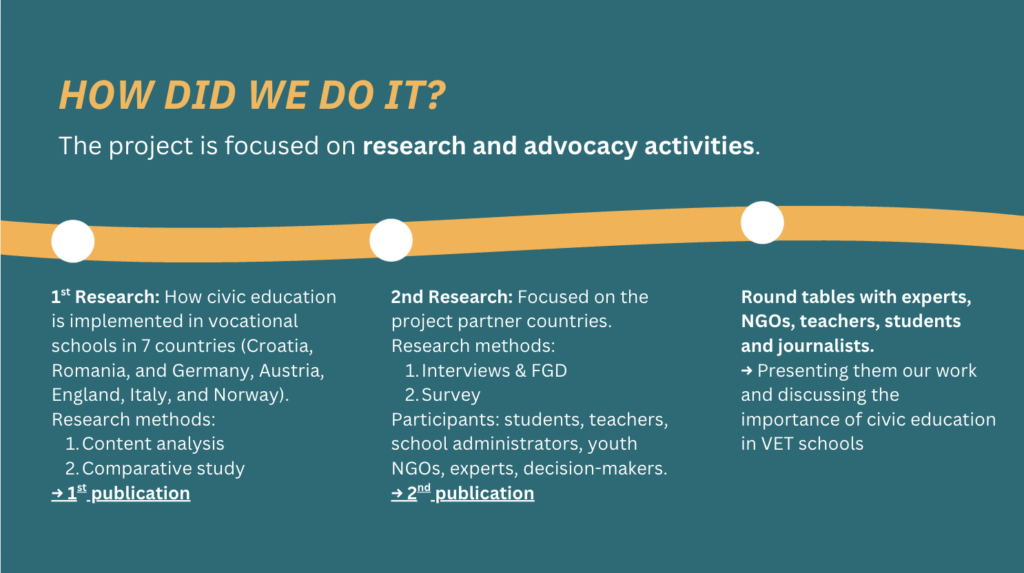
Later, Ana Guadalupe Farah, a Project Coordinator from CGE, shared insights from the National Positioning Paper on civic education in Thuringia, where there is a double challenge: demographic change and a shortage of skilled workers are colliding with an increasingly polarized political landscape. And yet, civic education remains marginal in everyday school practice. That’s why the policy recommendations in the paper focus on five key areas, which you can find in our National Position Paper here.
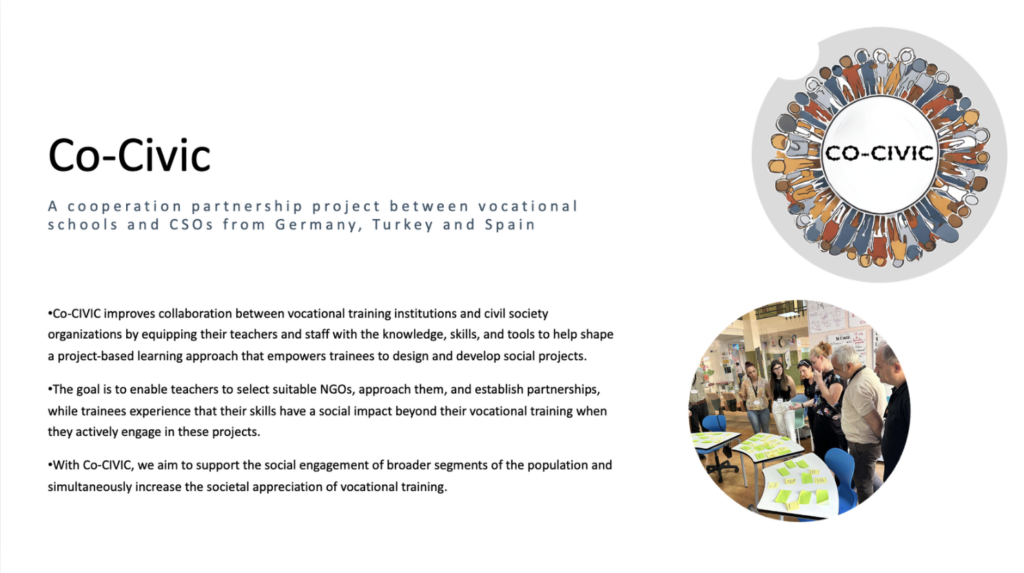
From there, Moritz Borchardt stepped in to talk about CoCivic, a cooperation project that brings together vocational schools and civil society organizations from Germany, Turkey, and Spain. The idea behind is that civic and democratic competencies are best learned through experience. The project aims to give teachers and staff the tools they need to create project-based learning opportunities that connect vocational skills with civic responsibility and community engagement. Moritz shared some practical wisdom from his experience, noting that successful collaborations often start with a personal connection made at a networking event. Whether it’s a headmaster or a community leader, having someone inside the school who acts as a champion for the partnership makes all the difference. The project has produced some useful resources, including handbooks for CSOs, frameworks for teachers, materials for students, and even an online accelerator programme to support VET-CSO partnerships through mentoring and peer learning. You can find them here.
After the presentations, participants engaged in an open discussion on key challenges for civic education in VET. Topics included cooperation between schools and NGOs, teacher training, and how to make civic education more inclusive in hierarchical school systems. A participant from Poland highlighted that even with strong materials and trained teachers, civic education is often treated as a low priority. Meanwhile, a project shared from Greece demonstrated how participatory approaches can help engage underrepresented VET students and strengthen democratic participation. As we wrapped up, participants highlighted the importance of collaboration, partnership, and shared resources for strengthening civic education in VET. They also pointed to key challenges such as limited teacher training, rigid institutional structures, and lack of time and resources. At the same time, there was a strong agreement on the need for better support for teachers, stronger school-NGO cooperation, and greater recognition of civic education’s real-life value.
We walked away from the event feeling encouraged and hopeful. A huge thank you to the DARE Network for co-hosting with us, and to every participant who brought their insights and experiences to the table. These conversations matter, and we’re looking forward to keeping them going and to have more collaborations.