
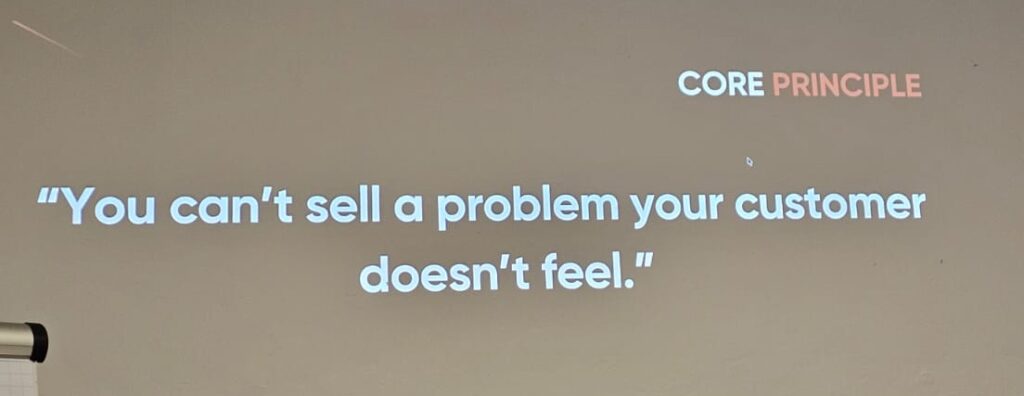
On Saturday, 7 March 2026, the Social Impulse Hub hosted its ninth module workshop on USP and Market Positioning as part of the Business Skills Program at Salinenstraße 34 in Erfurt. Facilitated by business coach and marketing expert Akhmad Dakhlalla, the session brought together aspiring entrepreneurs to explore how to clearly define their unique value and stand out in competitive markets. With a strong focus on practical application, the workshop guided participants in transforming broad ideas into precise and compelling value propositions.
The workshop began with an introduction to participants and their projects, creating space for exchange and contextualizing the session within real business ideas. This was followed by an overview of the workshop agenda and an introduction to the facilitator, whose experience in business strategy, B2B marketing, and value-based sales shaped the structure of the session.
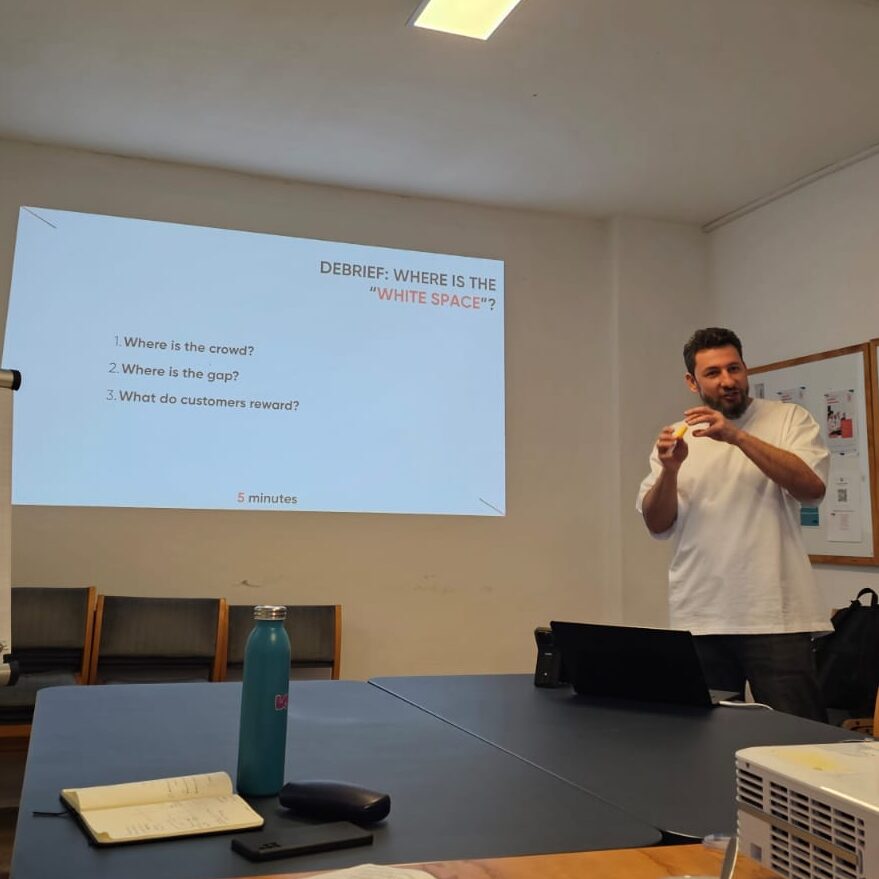
The core of the workshop introduced three strategic layers essential to any venture: value proposition (why customers buy), USP (why they choose you), and positioning (why they remember you). Participants reflected on how many businesses communicate value but fail to clearly express differentiation. This shift encouraged them to critically assess their own messaging and move beyond generic statements.
A key focus was understanding customer needs. Participants explored six practical methods for researching customers, including interviews, observation, data analysis, and testing assumptions. This reinforced the idea that strong positioning is grounded in real customer insights rather than assumptions. Discussions also highlighted evolving customer expectations, where users are informed, independent, and seek clear value and trust.
Through hands-on exercises, participants worked in teams to develop a one-sentence value proposition, translating their ideas into concise and targeted statements. This was followed by an exploration of what makes a strong USP, emphasizing the importance of specificity, benefit, and uniqueness. Participants examined why many USPs fail, often due to being too abstract, disconnected from real problems, or lacking proof.
The workshop then introduced practical tools for positioning, including the use of a positioning map to analyze competitors and identify gaps in the market. Participants mapped their own ideas and explored opportunities to differentiate themselves. Building on this, the concept of “category-of-one” thinking encouraged them to define highly specific niches and move away from broad, saturated categories. An exercise on micro-categorisation helped participants refine their positioning further.
To support the development of clear messaging, participants were introduced to multiple USP formulas and engaged in writing sprints to test different approaches. Peer feedback sessions allowed them to evaluate their statements based on clarity, value, differentiation, and credibility. This iterative process helped strengthen their ideas and refine their communication.
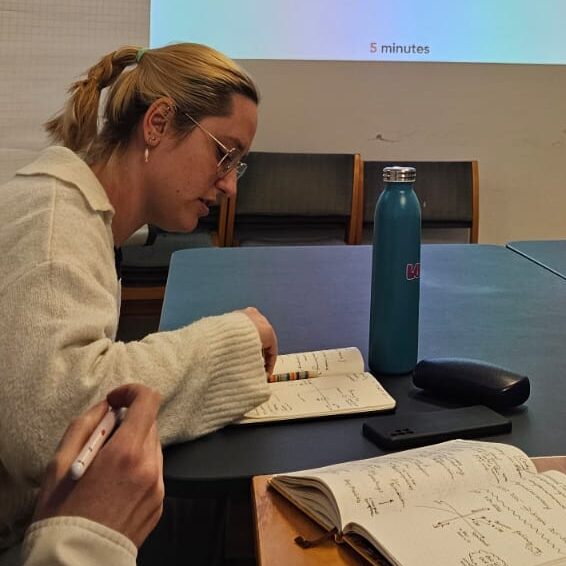
The session also emphasized the importance of making a USP defensible by adding proof, such as data, case studies, or clear mechanisms behind the solution. Participants then translated their USP into different pitch formats, including one-line, 8-second, and 30-second pitches, allowing them to communicate their ideas effectively in different contexts.
The workshop concluded with a reflection on when a USP is necessary and when other factors, such as market conditions or location advantages, may play a stronger role. A final Q&A session allowed participants to clarify their insights and reflect on how their understanding of customers and communication had evolved.
By the end of the session, participants left with a clearer understanding of their unique value, a defined positioning direction, and practical tools to communicate their ideas more effectively. Workshops like this continue to play an essential role within the Business Skills Program, equipping participants with the skills needed to build strong, differentiated, and impactful ventures.
The project has been co-funded under the Interreg Central Europe program of the European Union through the project “TASK4ISI” – Transnational Action to advance SKills and competences FOR Inclusive entrepreneurship and Social Innovation.