
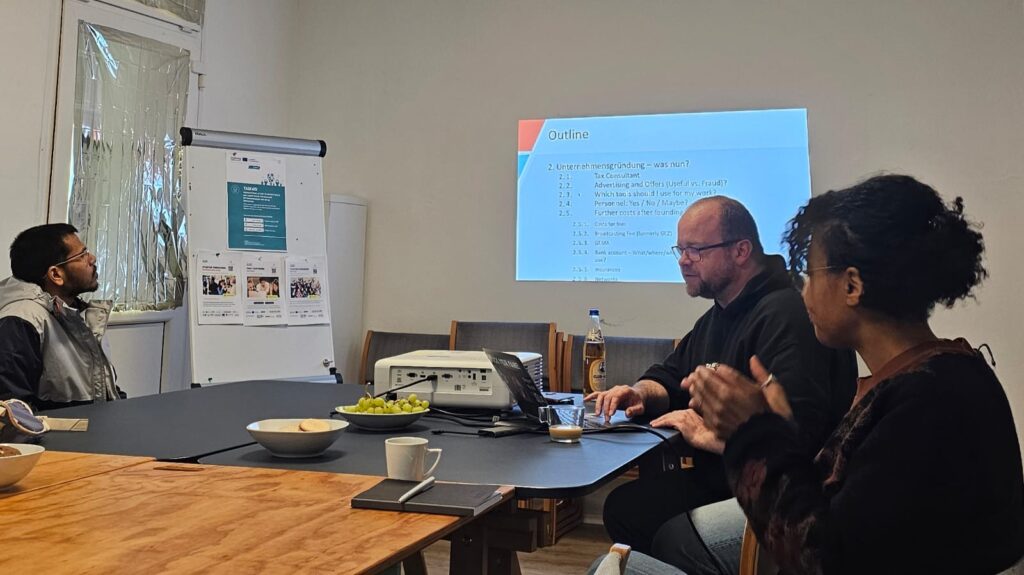
On Saturday, 14 March 2026, the Social Impulse Hub hosted the tenth session of the Business Skills Program at Salinenstraße 34 in Erfurt, continuing the practical learning journey of the Social Impulse Academy with a workshop on Financial and Business Management. Facilitated by Thorsten Glaser, the session brought together aspiring entrepreneurs to explore the foundational decisions and practical considerations involved in starting and managing a business.
The workshop opened with an outline of the session plan, followed by an introduction of participants and their business ideas. This initial exchange created an open and interactive atmosphere, allowing participants to situate their ideas within the broader context of business development and learn from one another’s perspectives.
The session then moved into a reflection on key considerations before starting a business. Participants explored the importance of location analysis, combining both target group analysis and competition analysis to better understand market conditions. This discussion emphasized the need to ground business ideas in realistic market insights rather than assumptions.
Building on this, participants were introduced to the concept of startup centers and the support systems available for early-stage entrepreneurs. The workshop also covered different legal forms of business, helping participants understand the structural and administrative implications of each option. Special attention was given to the distinction between freelancing and liberal professions, clarifying how different professional paths influence registration, taxation, and operational responsibilities.
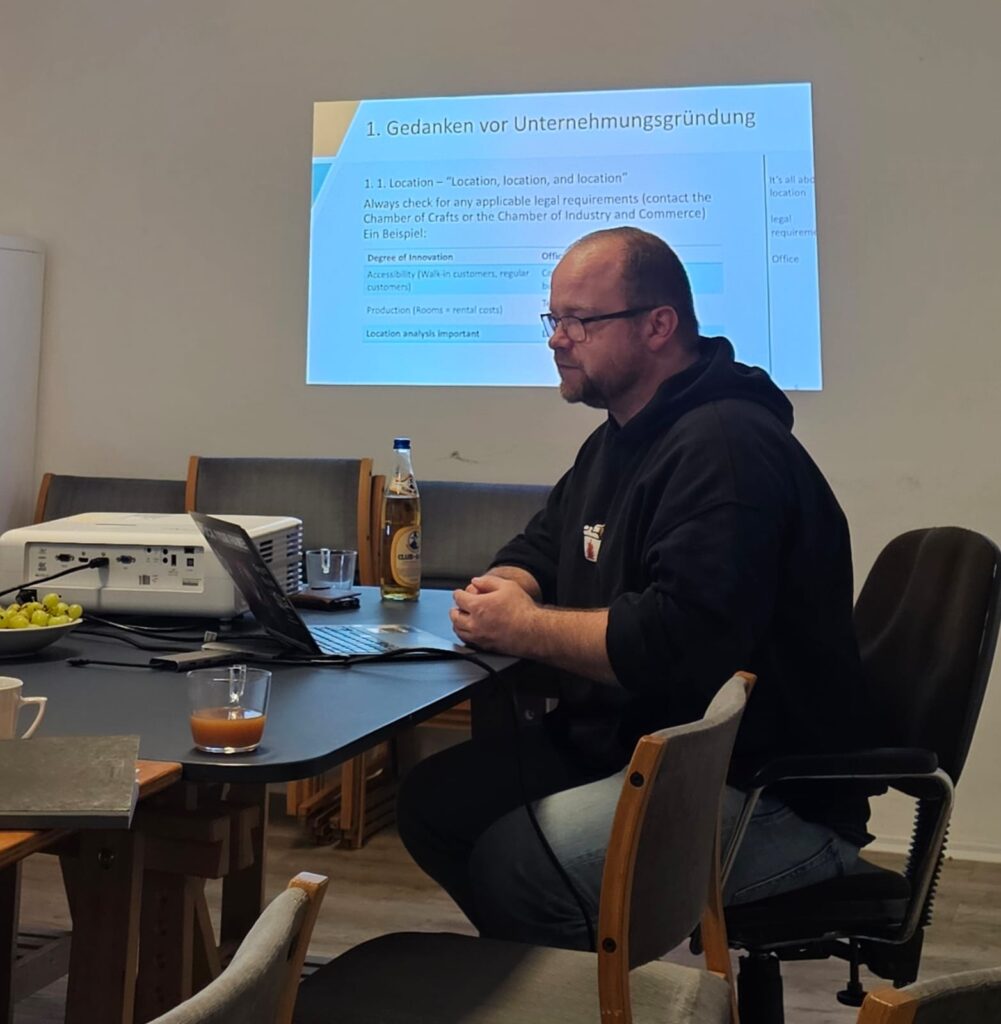
A practical segment of the workshop focused on financial and administrative aspects, including the role of a tax advisor and the importance of setting up clear financial structures from the beginning. Participants also explored how to develop offers and advertising strategies, ensuring that their services or products are communicated effectively to their target audience.
Further discussions addressed operational questions that many early-stage entrepreneurs face, such as which tools to use for their work, whether to hire staff or remain independent, and how to plan for growth. These considerations were framed as strategic decisions that evolve over time rather than fixed choices.
The workshop also highlighted often-overlooked aspects such as additional costs after founding, including ongoing fees, administrative expenses, and hidden operational costs. This helped participants gain a more realistic understanding of the financial commitments involved in running a business.
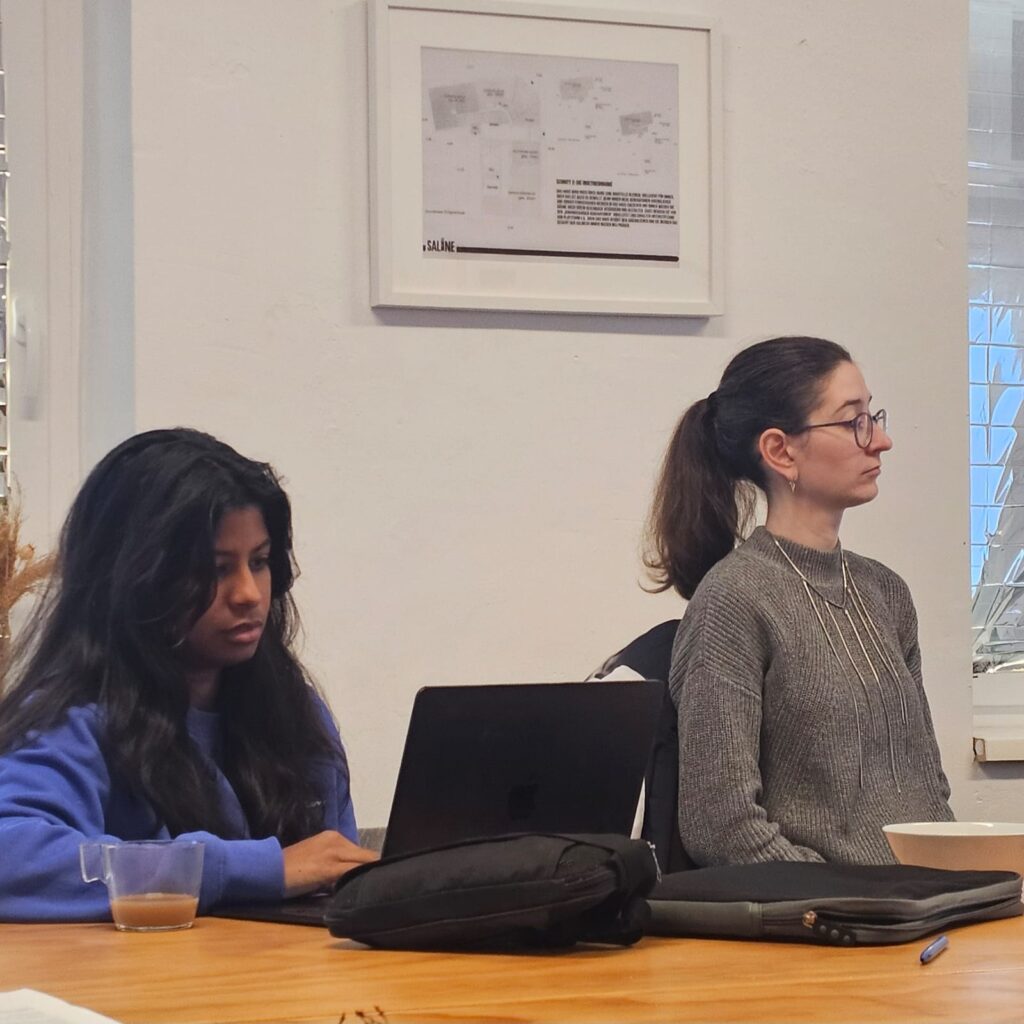
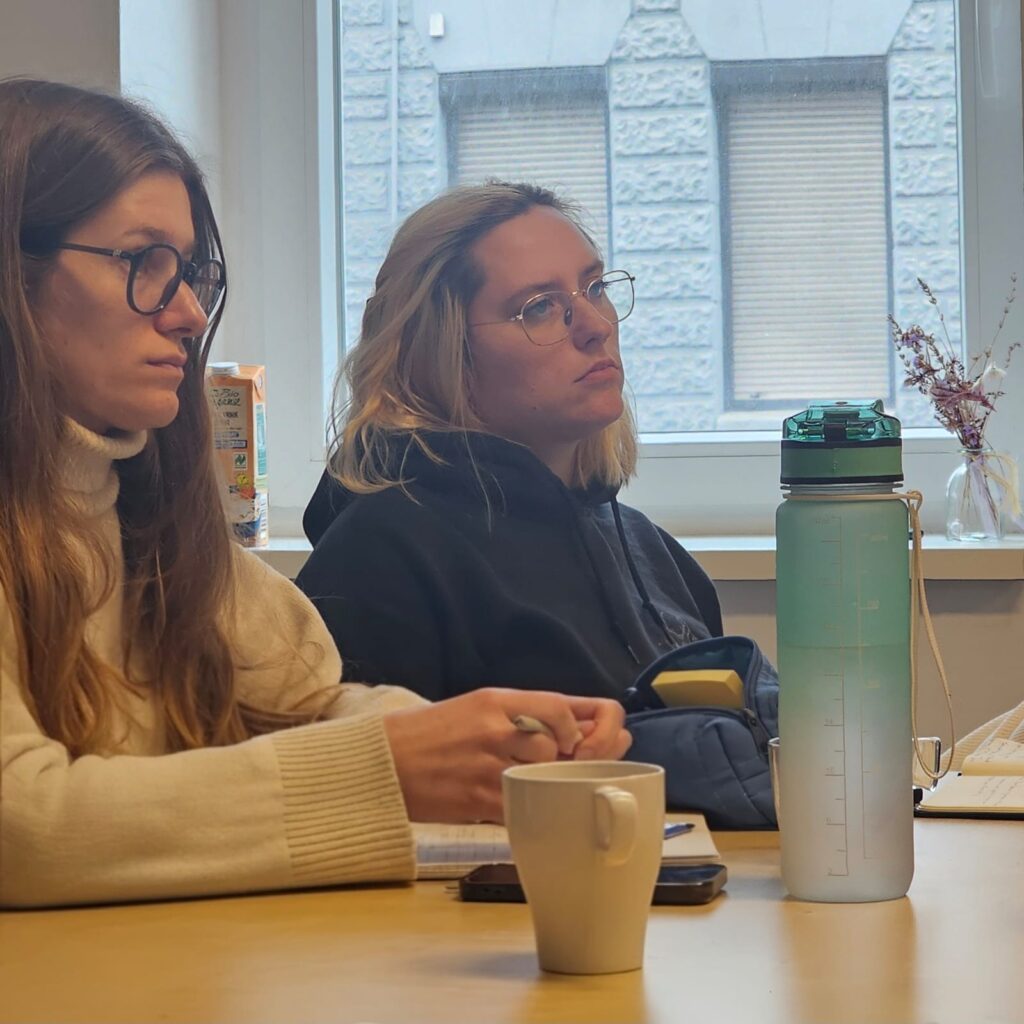
Throughout the session, participants engaged in discussions, asked questions, and reflected on how these concepts applied to their own ideas. The practical and structured approach of the workshop enabled them to connect theoretical knowledge with real-world application.
By the end of the workshop, participants left with a clearer understanding of the financial, legal, and operational foundations required to start and manage a business. As part of the Business Skills Program, sessions like this continue to equip participants with essential knowledge, helping them navigate the complexities of entrepreneurship with greater confidence and clarity.
The project has been co-funded under the Interreg Central Europe program of the European Union through the project “TASK4ISI” – Transnational Action to advance SKills and competences FOR Inclusive entrepreneurship and Social Innovation.