What should voting look like in the digital age? Can new technologies make democracy more accessible and inclusive, or do they risk weakening trust, transparency, and public confidence?
These questions shaped “Voting Reimagined: A Public Conversation on Digital Voting,” the public launch event of the DIGIVOTE Project, held online on 23 April 2026. Bringing together 117 participants from 15 countries, the event became a vibrant European exchange on one of the timeliest issues facing modern democracies.
What is DIGIVOTE?
DIGIVOTE explores how digital voting could strengthen democratic participation while also recognizing the risks and challenges it may create. Working across seven countries, the project examines how citizens perceive digital voting not only from a technical perspective, but also through the lens of trust, transparency, accessibility, and inclusion.
By bringing together citizens, researchers, civil society actors, and policymakers, the project aims to create informed dialogue and develop recommendations for more secure, transparent, and inclusive digital voting systems in Europe.
Open for Discussion format
The main goal of the event was to design a balanced and participatory public discussion, where opportunities and concerns could be explored side by side. Participants were invited to contribute to the dialogue with their questions, concerns and comments. Reflect, and share their personal opinions to a broader European discussion on what the future of voting could and should look like.
A Diverse Panel of Perspectives
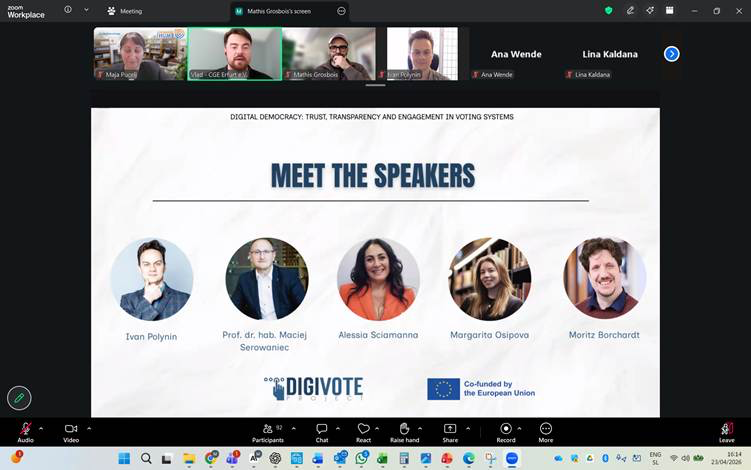
The heart of the event was the panel discussion, which brought together speakers from different countries and professional backgrounds.
The discussion opened with Ivan Polynin, a PhD researcher in Political Science at Tallinn University, who shared insights from Estonia’s democratic structures. Often seen as Europe’s leading example of digital voting in practice, he explained how the Estonian model functions and highlighted that technology alone is not enough public trust and strong institutions are essential.
From the legal perspective, Professor Maciej Serowaniec of Nicolaus Copernicus University in Toruń examined what constitutional safeguards are necessary for digital voting to be considered legitimate and trustworthy in democratic systems.
The conversation then moved to the role of information ecosystems with Alessia Sciamanna, a Doctoral Researcher in Equity, Diversity and Inclusion and Assistant in International and EU Law at Pegaso Digital University. She reflected on how misinformation, disinformation, and public narratives influence trust in elections and digital governance.
Adding the user-experience perspective, Margarita Osipova, a PhD researcher and Teaching Assistant in Human-Computer Interaction at Bauhaus-Universität Weimar, examined how citizens engage with digital systems and what makes them feel secure, confident, or excluded..
Finally, Moritz Borchardt, Chairman of the DARE Network and interdisciplinary social scientist, reflected on the German case, where electronic voting machines were challenged by the Federal Constitutional Court. His contribution highlighted the importance of transparency, democratic oversight, and public verifiability in any future voting system.
Participation Beyond the Panel
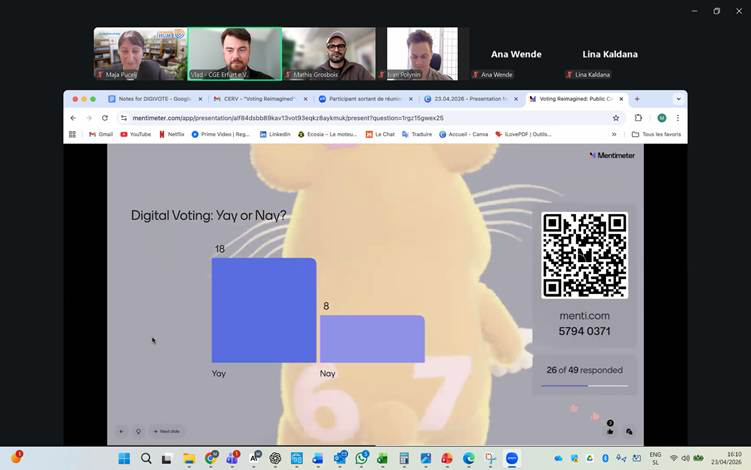
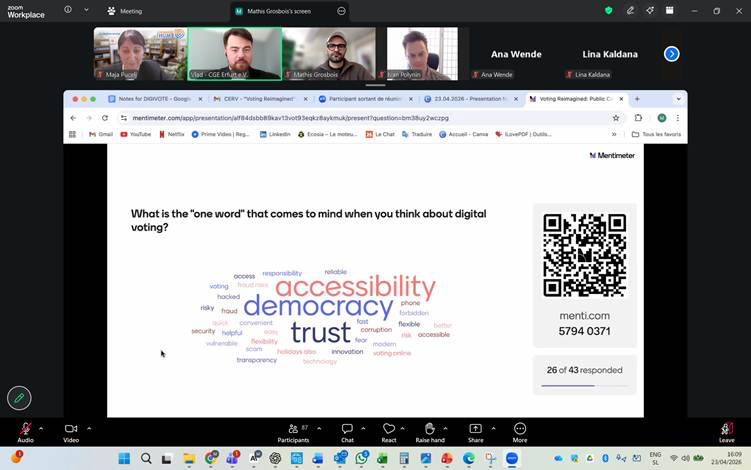
The event was intentionally interactive. Participants were invited to share their views, helping the partnership better understand the experiences and expectations of those in the virtual room.
Questions and comments were collected throughout the discussion via chat, creating a dynamic exchange between speakers and attendees rather than a one-directional panel.
The DIGIVOTE Survey
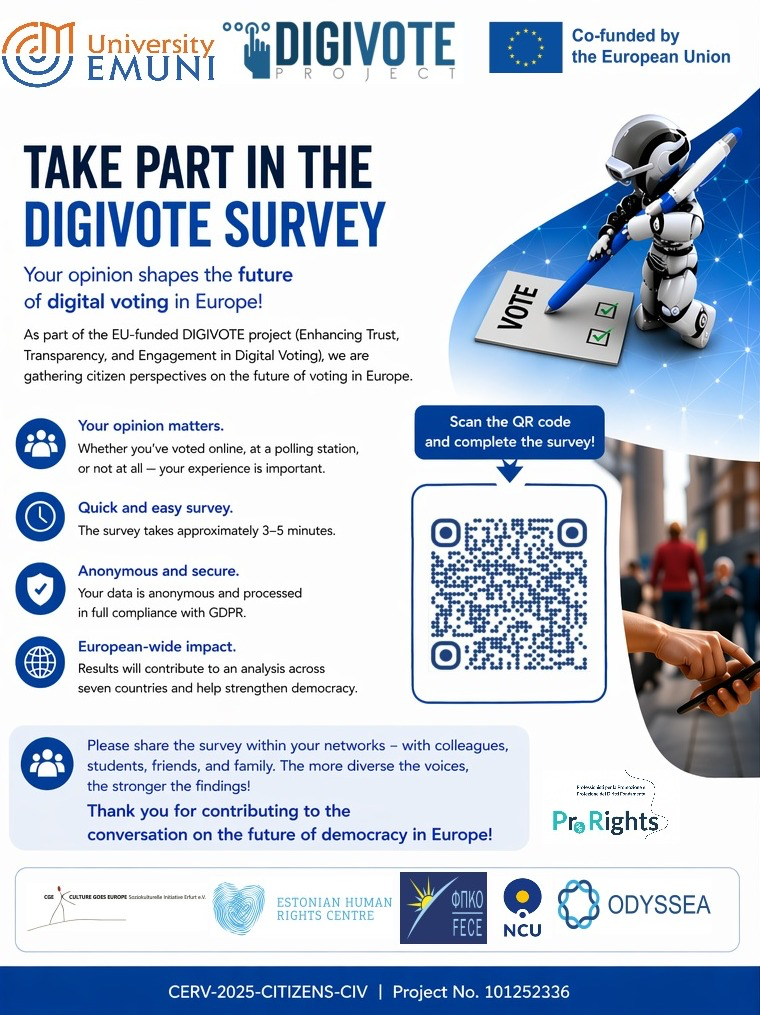
Before the final Q&A session, participants were introduced to the DIGIVOTE public survey by Maja Pucelj from EMUNI University, coordinator of the DIGIVOTE Project. The survey is a central part of the initiative and will help inform future policy recommendations to the European Commission in the later stages of the project.As part of the DIGIVOTE initiative, citizens across Europe are invited to take part in the public survey on the future of digital voting.
We invite you to take part in the DIGIVOTE survey, which takes just 3–5 minutes to complete, is fully anonymous, GDPR-compliant, and will contribute to a European-wide analysis across seven countries. We would also greatly appreciate it if you could share the survey within your networks and provide feedback on the event through the EU Survey on Justice, Rights and Values https://digivote-survey-823704445958.us-west1.run.app.