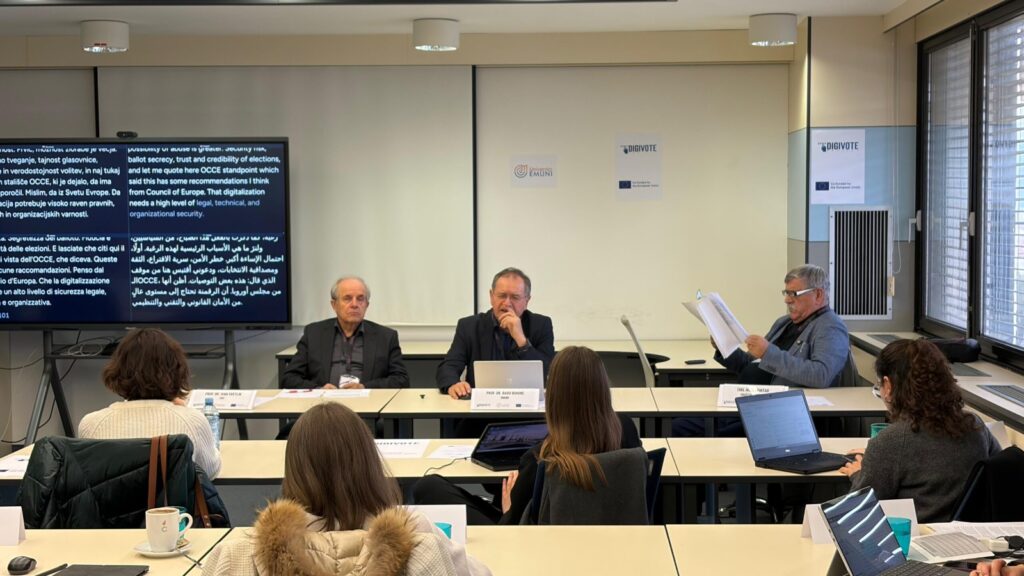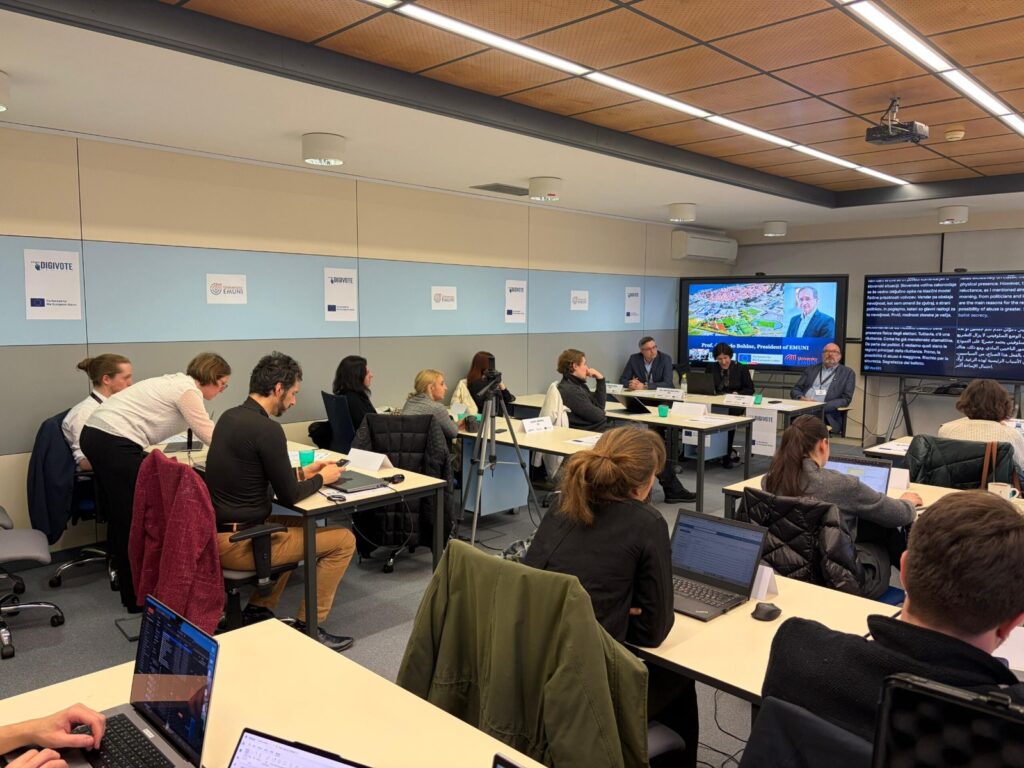
On 10 February 2026, CGE Erfurt e.V. joined partners, researchers and civil society representatives in Koper, Slovenia, for the launch of DIGIVOTE – Digital Democracy: Trust, Transparency and Engagement in Voting Systems.
Hosted by EMUNI University, the event marked the beginning of the project’s first work package and combined the official consortium kick-off meeting with a public conference on the opportunities and risks of electronic and internet voting.
For CGE, the meeting provided an important first opportunity to exchange with the full partnership, clarify the upcoming activities and begin a European discussion about what trustworthy digital elections should look like.
Starting the European cooperation
During the morning session, EMUNI introduced the project’s objectives, structure and timeline. Each partner then presented the work packages it will coordinate.
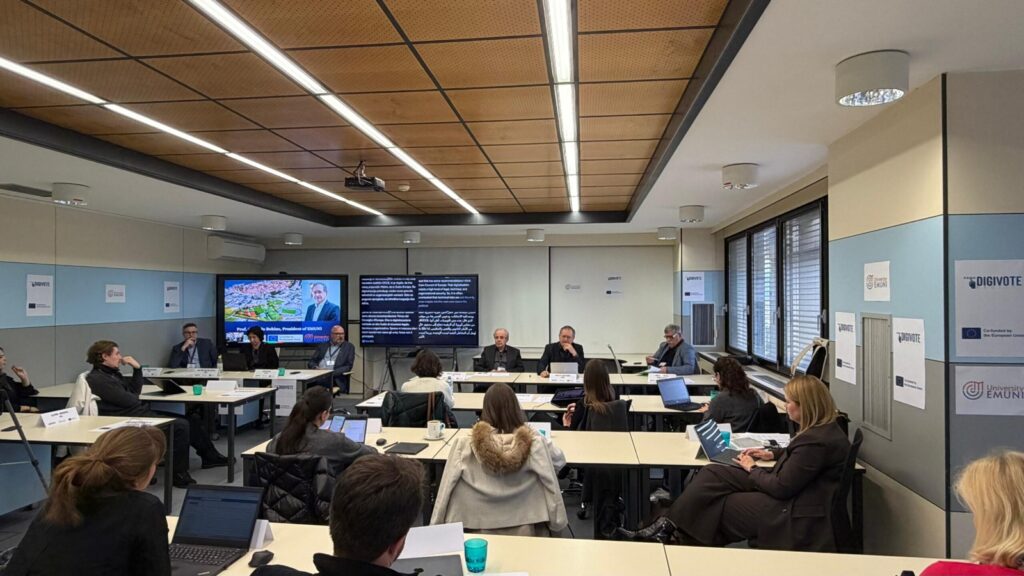
DIGIVOTE brings together activities in Bulgaria, Estonia, Germany, Greece, Italy, Poland and Slovenia. These include national discussions on digital voting, youth debates, surveys, conferences, activities addressing disinformation and a Citizens’ Policy Lab.
CGE will have a substantial role in the project. We will coordinate:
WP2: Voting Reimagined – Starting the Digital Conversation
WP8: Voting in Germany – Paper, Digital or Both?
WP13: Co-Creating the Vote – Citizens in the Policy Lab
Our contribution will focus particularly on citizen participation, political education and creating accessible spaces in which people can discuss digital voting critically.
DIGIVOTE does not start from the assumption that all European countries should adopt the same voting system. Instead, the project compares different national experiences and asks which legal, social and technical conditions are necessary for democratic digital voting.
Digital voting is not only a technical question
The public conference in the afternoon brought together experts from the fields of law, cybersecurity, political science, democracy and digital participation.
The speakers included Dr. Giovanna Di Minico, Gorazd Božič from SI-CERT, Simon Delakorda, Dr. Alessia Sciamanna, Dr. Jurij Toplak, Emil Milan Pintar, Dr. Rado Bohinc and Dr. Ivan Svetlik. The discussion was moderated by DIGIVOTE project leader Assoc. Prof. Dr. Dr. Maja Pucelj.
A central message was that digital voting cannot be treated simply as an IT project.
A digital electoral system must protect the secrecy of the vote, accurately record and count ballots, remain accessible to different groups and withstand cyberattacks. At the same time, it must be understandable and publicly legitimate.
As highlighted during the conference:
Without public trust in institutions, procedures and verifiability, digital voting cannot succeed.
Citizens do not necessarily need to understand every technical detail. However, they need convincing reasons to believe that the system is secure, independently controlled and capable of producing a result that can be verified.
Creating doubt may be enough to damage an election
One of the most important points raised during the conference concerned hybrid threats and disinformation.
An attack on an election does not necessarily need to change the votes. In some cases, the objective may simply be to create doubt about whether the system worked correctly.
The goal may not be to manipulate the result directly, but to make citizens believe that manipulation could have taken place.
A false claim, fabricated technical “evidence” or temporary disruption may be enough to weaken confidence in the final result. This means electoral resilience is not only about cybersecurity. It is also about communication, transparency and the ability of institutions to respond credibly when problems or accusations arise.
This is especially relevant in digital voting, where important parts of the process take place through software and technical infrastructure that are not directly visible to most citizens.
Digital voting should expand choice, not create new exclusion
Speakers also emphasised that digital voting should not necessarily replace paper voting.
Instead, it could be introduced as an additional option, allowing voters to choose the method that best fits their situation.
Digital voting may make participation easier for citizens living abroad, people with mobility restrictions or those who face difficulties reaching polling stations. It may also correspond more closely to the everyday habits of younger people, who already use digital devices for communication, banking and administrative services.
At the same time, not everybody has equal access to secure devices, digital identification or reliable internet connections. Digital skills also vary considerably.
For this reason, accessibility must be considered from the beginning. A system that makes voting easier for one group should not create new barriers for another.
The broader DIGIVOTE project therefore places strong emphasis on citizens, young people, older adults, people with disabilities and digitally marginalised communities. Its aim is not only to research them, but to involve them directly in discussions and policy development.
What comes next The Koper conference was the starting point for the next stages of DIGIVOTE.
Partners will now conduct national activities, surveys, debates and participatory events. The results will contribute to scientific publications, policy recommendations and a European blueprint for the future of digital voting.
For CGE Erfurt e.V., the key question is not simply whether digital voting is technically possible. The more important question is:
Under which conditions could digital voting strengthen democracy rather than weaken it?
In our upcoming activities, we will work with citizens and stakeholders to explore concerns around security, accessibility, transparency, trust and democratic control.
The meeting in Koper showed that Europe needs an open discussion before major decisions are taken. The future of elections should not be determined by technology alone. It must be shaped by democratic principles and by the people expected to use and trust these systems.