
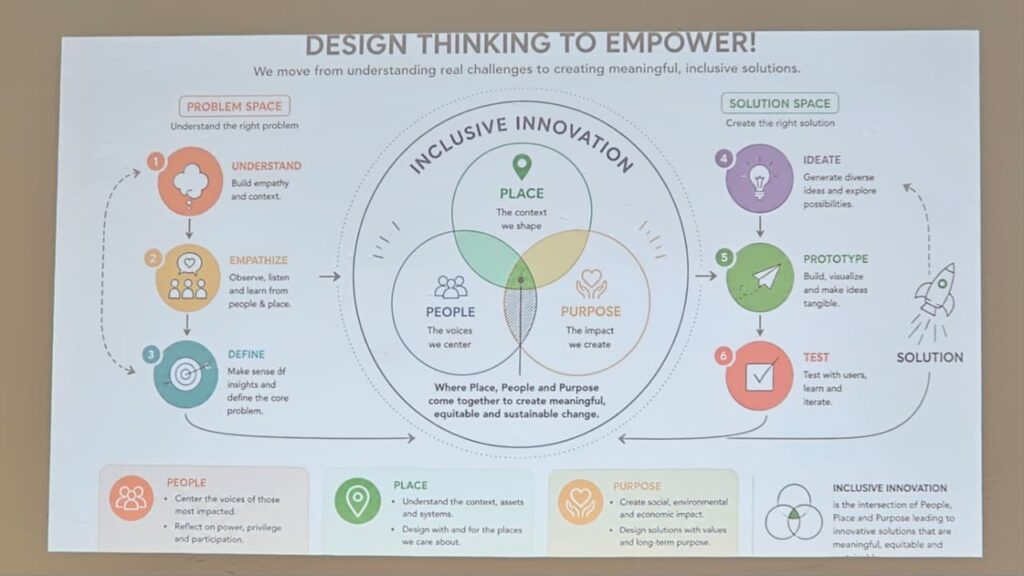
On Saturday, May 30th, the Social Impulse Hub hosted a Design Thinking Day as part of the Business Matchmaking Program, bringing participants together for an interactive workshop focused on human-centered innovation and creative problem-solving. Facilitated by Ammalia Podlaszewska, the session explored how design thinking can help entrepreneurs create solutions that are impactful, relevant, and grounded in real human needs.
The workshop opened with a collaborative round of introductions, where participants shared their names, startup ideas, concerns, and expectations for the day. This “NICE approach” encouraged openness and created a supportive atmosphere for exchange and reflection. Ammalia then introduced the core principles of design thinking, emphasizing innovation as a process rooted in understanding people, identifying needs, and creating meaningful value. Participants reflected on the relationship between innovation, opportunity, and resources, while discussing the difference between invention, imitation, and value-driven innovation.
A major focus of the session was developing awareness and empathy as part of the design thinking process. Participants explored how observing, questioning, reflecting, and empowering users can help entrepreneurs better understand the problems they are trying to solve. Through group activities, participants worked with tools such as the Empathy Map Canvas and Community Mapping Canvas to break down ideas, understand user perspectives, and identify key challenges within their target communities.
Building on this foundation, the workshop guided participants through defining and reframing problems using POV (Point of View) Boxes. Discussions examined the difference between well-defined, ill-defined, and “wicked” problems, helping participants understand the complexity of social and entrepreneurial challenges. To generate solutions, participants engaged in the Crazy 8’s ideation exercise, encouraging rapid thinking, experimentation, and the development of a wide variety of ideas before narrowing them down into more focused concepts.
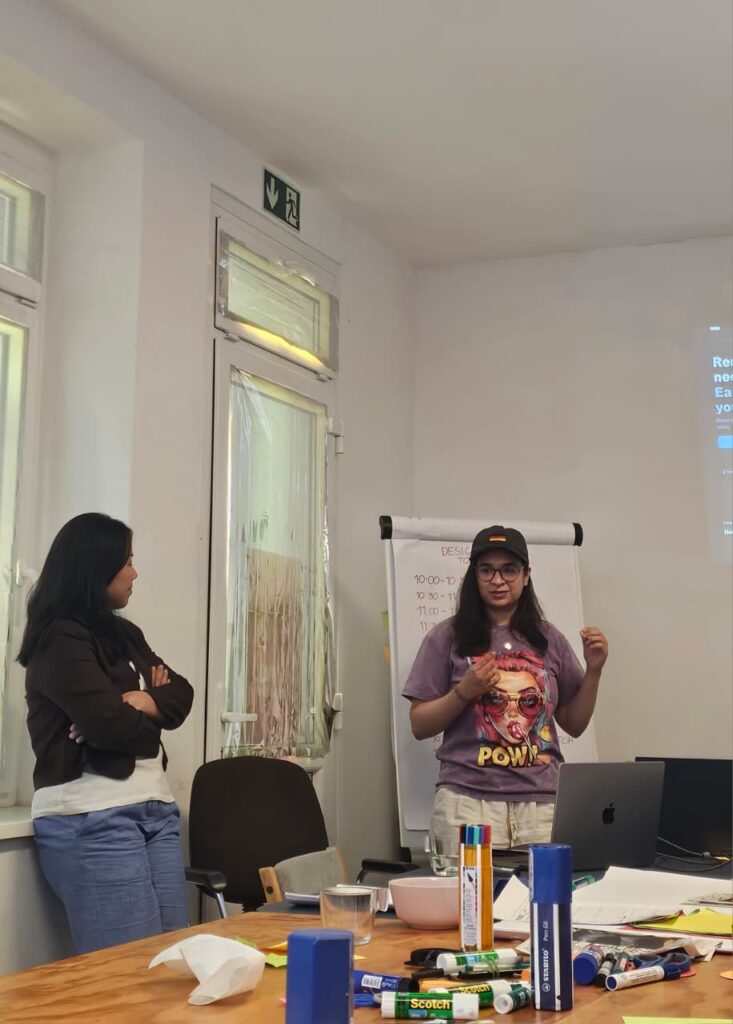
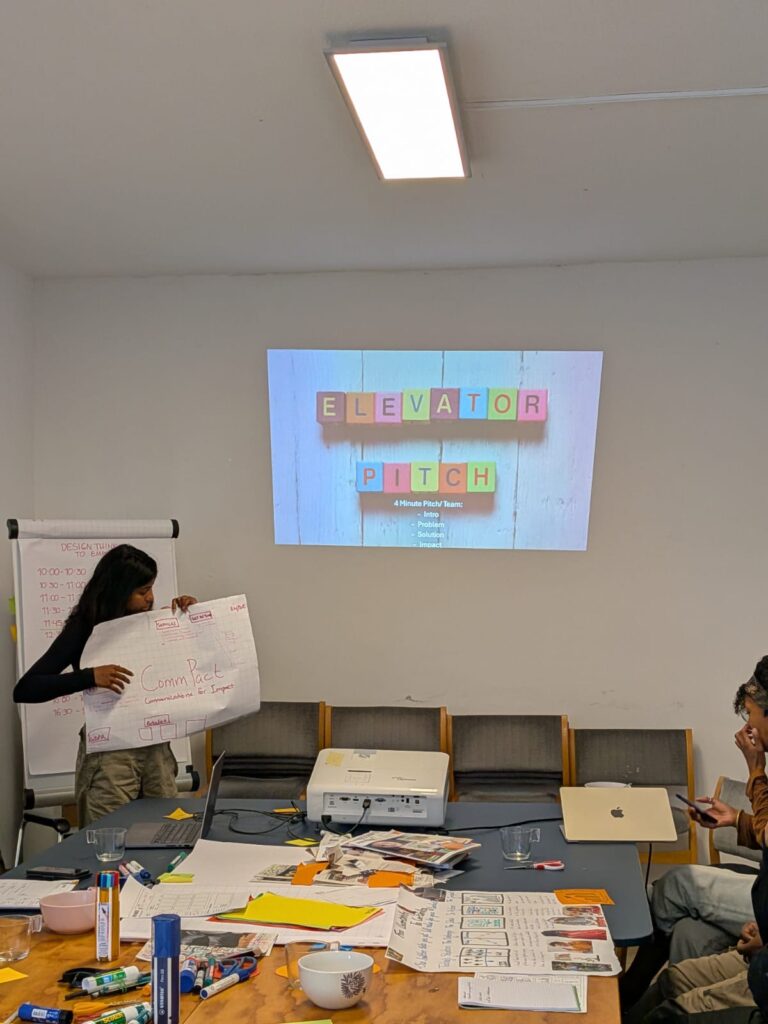
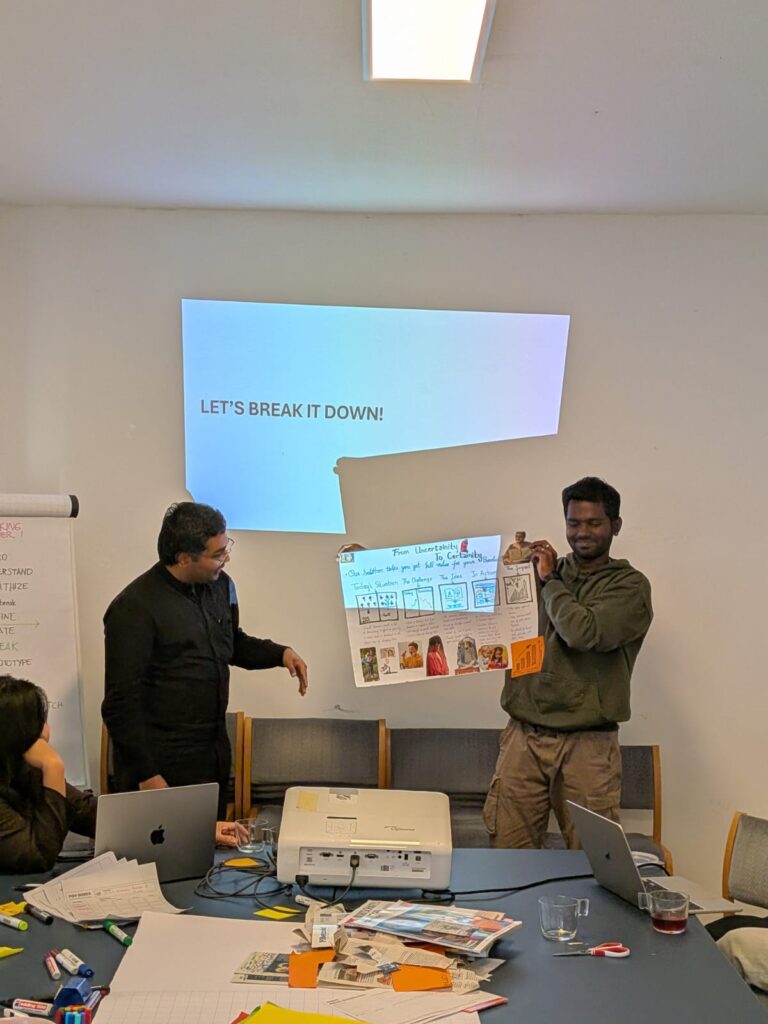
The second half of the workshop centered on prototyping and testing ideas. Participants explored different prototype formats, including community journey prototypes, visual storyboards, rapid service prototypes, digital/AI prototypes, and social business model canvases. Working in groups, they tested and refined their concepts before presenting them through short elevator pitches that highlighted the problem, solution, and intended impact. The session concluded with presentations, feedback, and discussion, allowing participants to reflect on how design thinking can support more human-centered and impactful entrepreneurship.
By the end of the workshop, participants left with practical tools for innovation, a deeper understanding of user-centered problem solving, and new ways to develop and communicate their ideas. As part of the Business Matchmaking Program, the Design Thinking Day reinforced the importance of experimentation and collaboration in building meaningful and sustainable ventures.
The project has been co-funded under the Interreg Central Europe program of the European Union through the project “TASK4ISI” – Transnational Action to advance SKills and competences FOR Inclusive entrepreneurship and Social Innovation.