
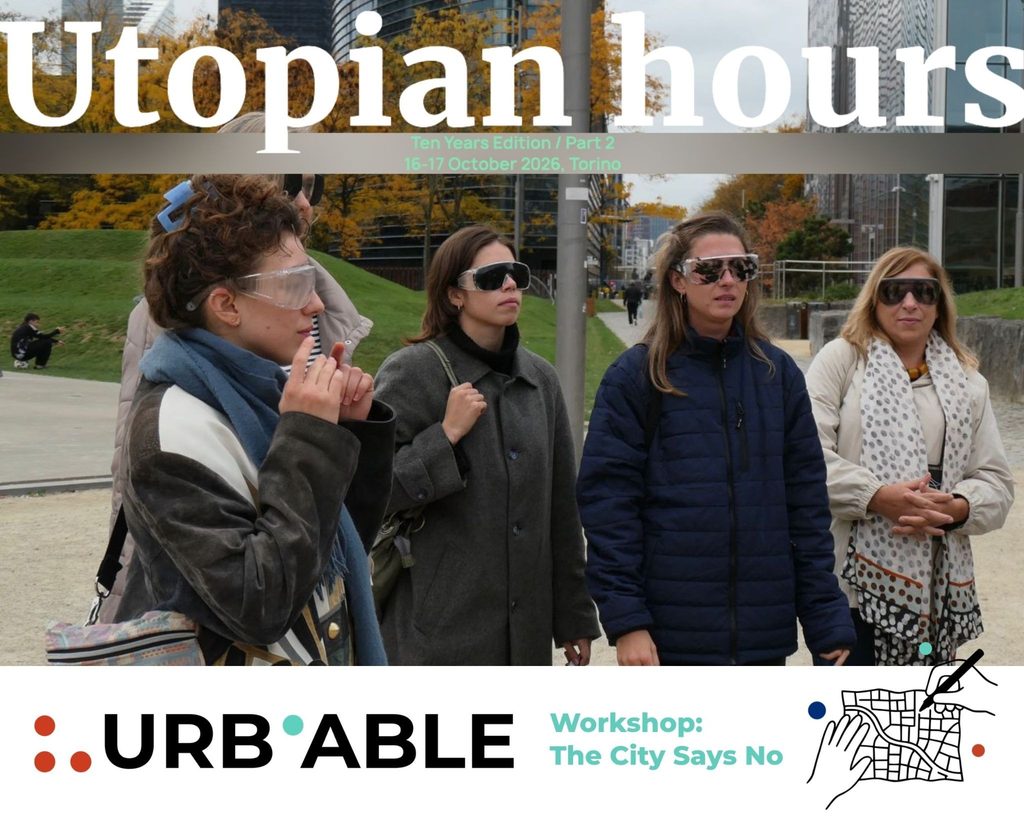
At the tenth anniversary edition of Utopian Hours, which attracted more than 4,000 visitors last year, Culture Goes Europe will host a European workshop on young people with disabilities and their right to shape the cities they live in, with the consortium of the EU-funded project Urb.Able (Project No. 2025-KA220-YOU-9465C1D5)
Who has the right to use the city, and who gets to decide how it is designed? This is the question that Culture Goes Europe will bring to Turin on 17 October. Together with its European partners, we have been invited to lead “The City Says No”, an international workshop at the tenth anniversary edition of Utopian Hours, one of the leading international festivals dedicated to the future of cities. At its heart is a group whose voices remain far too often overlooked in urban development: young people with disabilities.
Utopian Hours brings together urban planners, architects, policymakers, activists and urban innovators from around the world. The 2025 edition attracted more than 4,000 visitors, with participants from over 30 cities worldwide. Thousands of visitors are again expected for the 2026 anniversary edition, taking place in Rotterdam and Turin. The Turin programme features more than 30 international speakers, over 350 Italian policymakers and urban professionals, and more than 100 city representatives from across Europe.
Alongside internationally renowned architects and urban experts, Culture Goes Europe (represented by Leonie Borutta and Giovanni Muñoz) will also take its place on this year’s programme with the workshop “The City Says No”.
“A city can say no without saying a word”
A pavement that is too high, a confusing pedestrian crossing, an overwhelming sensory environment, or a square where you simply do not feel welcome. Cities are full of visible and invisible barriers that determine who can move freely, who can participate, and who ultimately gets excluded.
For young people with physical, sensory or cognitive disabilities, these barriers can be particularly challenging. Yet they are rarely given a meaningful voice in decisions about the design and use of public space.
Beyond the conference room, into the streets
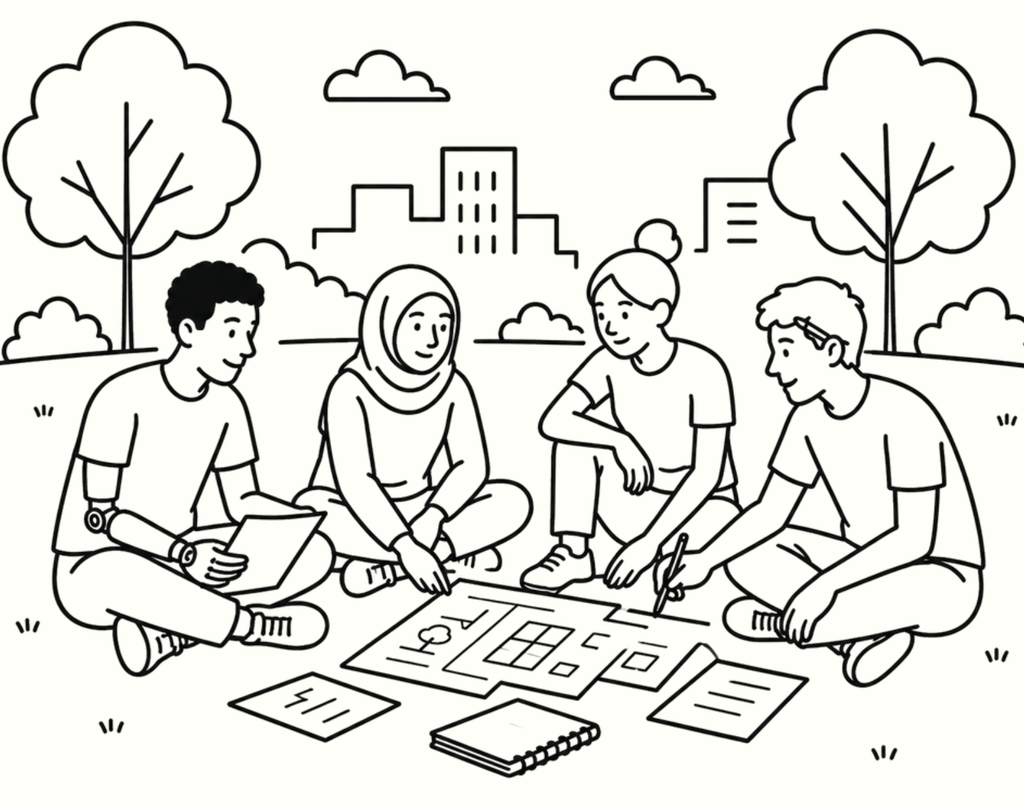
During “The City Says No”, participants will leave the conference venue to explore the streets of Turin’s Aurora neighbourhood. Working in small international teams, they will examine the city from different perspectives, paying particular attention to the experiences and needs of young people with disabilities.
They will use participatory research methods developed and applied by the consortium, including a digital place evaluation tool, interactive maps and persona cards. These tools help participants identify not only physical obstacles, but also social, sensory and other forms of exclusion.
Their observations will then be translated into practical proposals for improving public space. The findings will be brought together in a visual map and a report containing recommendations for local policymakers, urban planners and the festival organisers.

A challenge that is just as relevant for German cities
The questions being raised in Turin are just as relevant to German cities. While public authorities continue to invest in urban regeneration, greener neighbourhoods, mobility and accessible public spaces, young people’s involvement in actual decision-making often remains limited.
Culture Goes Europe therefore advocates a shift from traditional consultation towards genuine shared decision-making. This means not simply listening to young people, but giving them the power to make decisions, experiment and take responsibility.
Thai is the core concept of URB.ABLE, a European Erasmus+ project, bringing together organisations from seven countries. The consortium develops innovative tools and methods that enable young people, including those with disabilities, to take an active role in shaping their living environments.
Utopian Hours celebrates ten years of international urban innovation
Utopian Hours is celebrating its tenth edition with a special international programme across Rotterdam and Turin. Organised by Stratosferica, the festival has grown over the past decade into a major European meeting point for innovative ideas about the future of cities.
The anniversary edition in Turin, taking place on 16 and 17 October, will bring together internationally recognised figures from architecture, urban planning, policymaking and social innovation, including British architect Sir Peter Cook and representatives of Herzog & de Meuron.
The workshop led by the URB.ABLE consortium will take place on Saturday, 17 October, from 2:00 pm to 4:00 pm, at Dorado in Turin.
More information : European URB.ABLE project: www.urbable.eu
Utopian Hours: www.utopianhours.it
The Urb.able project (KA220-YOU-9465C1D5) is co-funded by the European Union through the Erasmus+ Programme. Views and opinions expressed are, however, those of the author(s) only and do not necessarily reflect those of the European Union or the European Education and Culture Executive Agency (EACEA). Neither the European Union nor EACEA can be held responsible for them.