
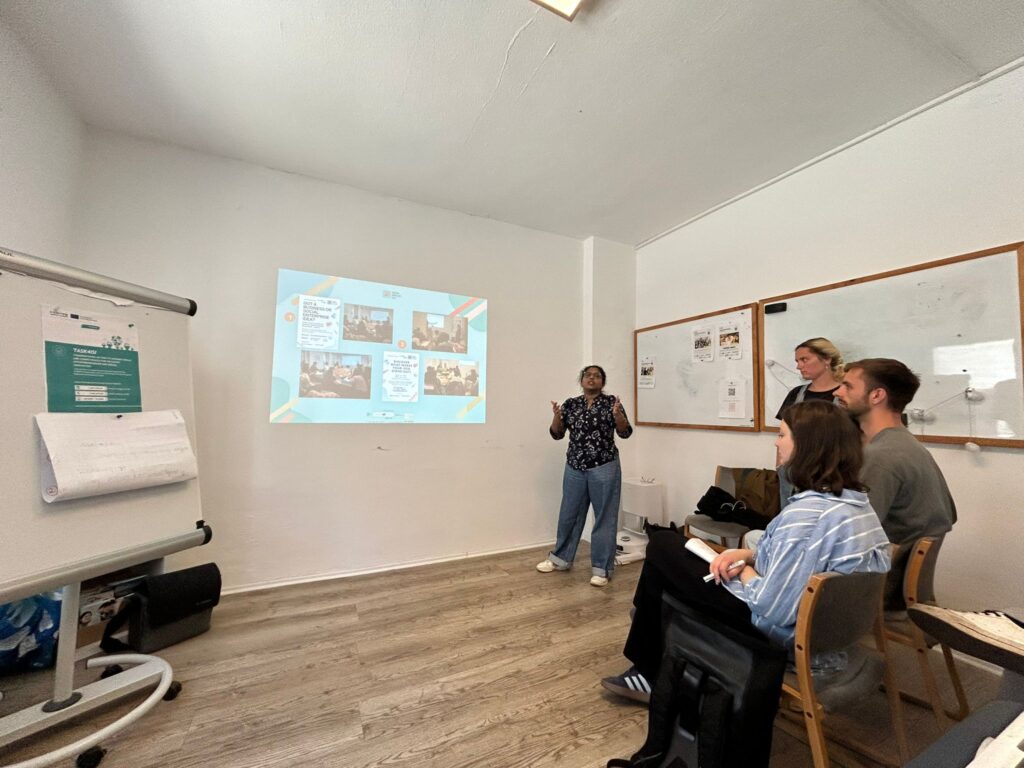
On 5th June 2026, the Social Impulse Hub hosted an interactive workshop titled “From Place to Social Enterprise” as part of the TASK4ISI project, with participants of the Summer School from the Bauhaus-Universität Weimar. Participants included students of the Bauhaus-Universität in Weimar, the Notre Dame University – Louaize in Lebanon and Alexandria University in Egypt. The session explored the relationship between placemaking, social entrepreneurship, and community inclusion, encouraging participants to rethink how local spaces can become more welcoming, meaningful, and socially impactful through entrepreneurial ideas.

The workshop began with an opening by Dr. Ammalia Podlaszewska where she introduced Culture Goes Europe, followed by a presentation by Mirna Al Chaib on the project URB.ABLE and a short presentation introducing TASK4ISI and the Social Impulse Hub by Sharon Susan Saj. Participants reflected on how entrepreneurial tools can be used not only to generate income, but also to create social value by supporting inclusion, participation, education, employment, and community connection. The presentation also highlighted how TASK4ISI has worked with migrants, international students, women, and young people, using entrepreneurship as a pathway toward self-confidence, social participation, and stronger local networks.
Building on this introduction, participants explored the connection between placemaking and social entrepreneurship. The session emphasized that while social entrepreneurship often begins with identifying a social need, placemaking starts with examining a local space and asking how it could become more useful, accessible, and community-oriented. By combining these perspectives, participants were encouraged to imagine how spaces and community needs can come together to inspire sustainable and socially driven initiatives.
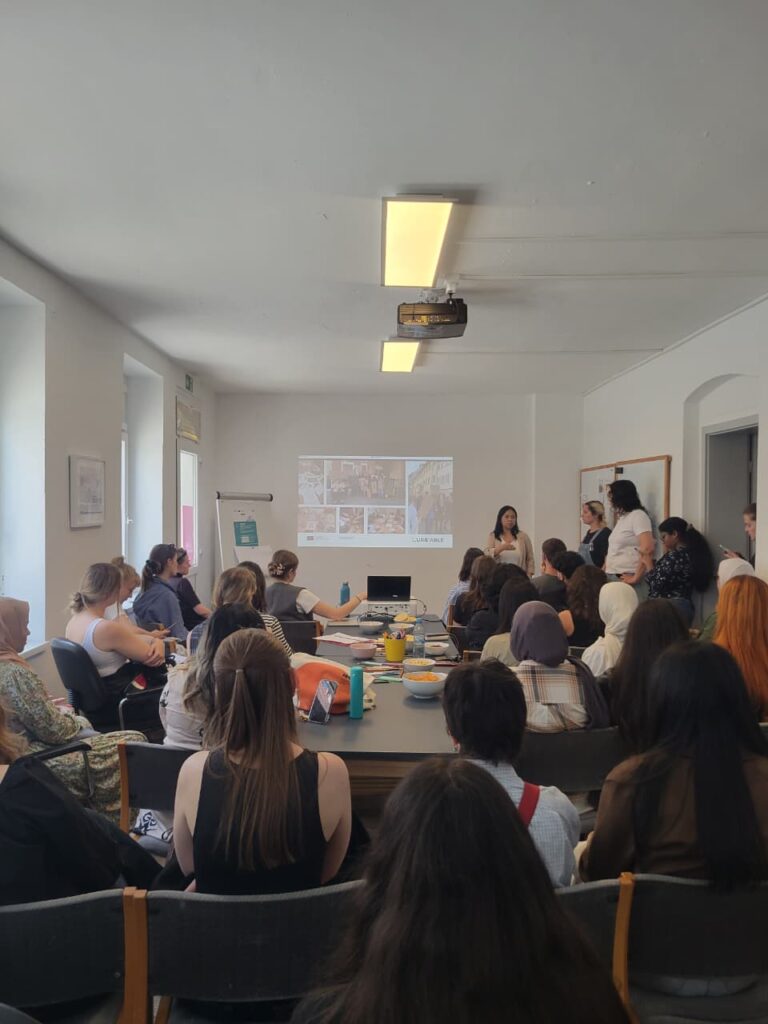
The main activity of the workshop, “A Place with a Purpose,” invited participants to work in groups using a set of place cards, need cards, and action cards. Groups combined spaces such as empty shops, parks, cafés, or university rooms with challenges including loneliness, language barriers, lack of youth spaces, or sustainability issues. They then developed social entrepreneurship concepts involving activities such as workshops, mentoring corners, skill exchanges, repair cafés, or community markets. Using guided questions, participants defined their target groups, social impact, and ideas for how their concepts could continue sustainably beyond a one-time event.
The session concluded with short group pitches, where participants presented their ideas and received feedback from others. Through reflection and discussion, the workshop demonstrated how entrepreneurship can emerge not only from products or services, but also from places, shared needs, and opportunities for co-creation within communities. The exercise highlighted the potential of local spaces to foster inclusion, collaboration, and social innovation when people are invited to actively shape them together.
The project has been co-funded under the Interreg Central Europe program of the European Union through the project “TASK4ISI” – Transnational Action to advance SKills and competences FOR Inclusive entrepreneurship and Social Innovation.