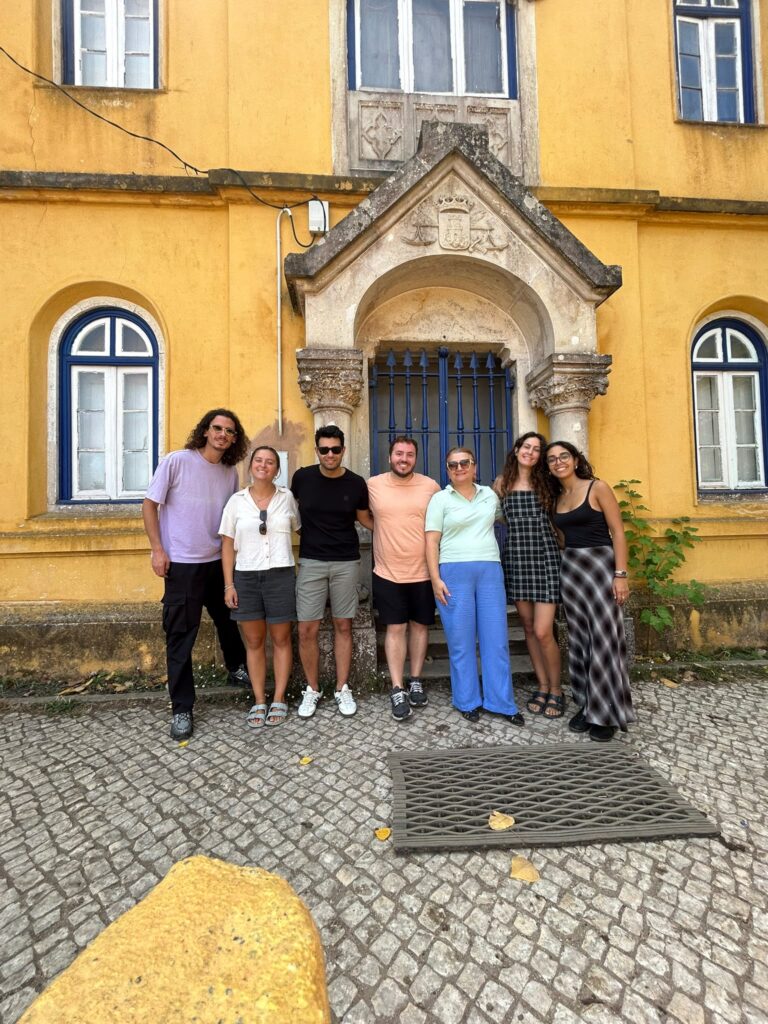
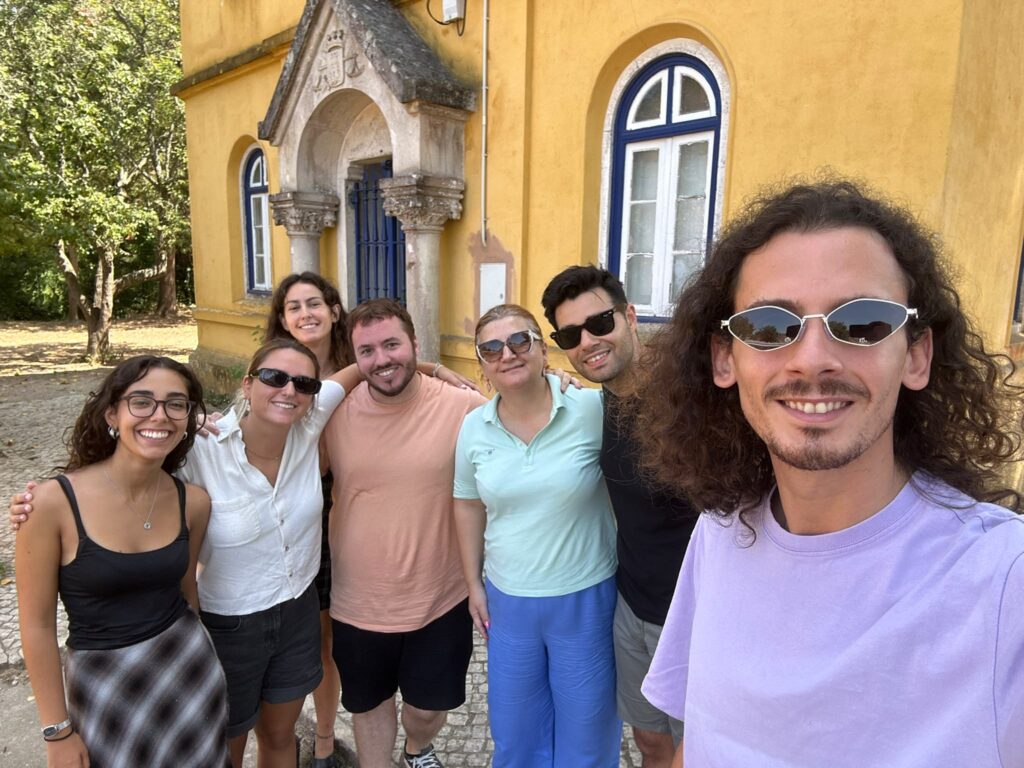
From the 15th to the 16th of August, partners from 6 European countries came together in Sintra, Portugal, for an Advanced Partner Visit (APV) as part of the Build the Resistance project. The meeting brought together organisations from Germany, Portugal, Greece, Italy, Serbia and Spain to prepare the next stages of the project and, most importantly, to build a shared understanding of what it means to learn about resistance, democracy and anti-fascism together.
Culture Goes Europe e.V. (Germany) coordinates the project and brings extensive experience in non-formal education, youth empowerment, democracy, human rights and international project management. CGE will also host the second youth exchange in November. Dínamo – Associação de Dinamização Sócio-Cultural (Portugal), based in Sintra, hosts the first Youth Exchange and contributes its expertise in youth participation, democratic citizenship, human rights, art and cultural activism. EUphoria Youth Lab (Greece) contributes experience in historical remembrance, intercultural dialogue, human rights and European citizenship, while Respirare Sinapsi (Italy) brings a strong background in photography, video-making, contemporary art and cultural participation. Volonterski Centar Vojvodine (Serbia) contributes experience in peace and volunteering, anti-discrimination, grassroots activism, political mythology, propaganda and ethical journalism. Finally, Euroactive Spain (Spain) brings experience in inclusion, diversity, active citizenship, peer education, media and youth work, particularly with young people from rural areas. Together, these different perspectives create a genuinely international space for learning, questioning and exchanging ideas about resistance.
The APV was much more than a practical planning meeting. Over 2 days, the partners explored their expectations and concerns, shared their different experiences and expertise, discussed participant support and safeguarding, and worked together on the programme for the upcoming Youth Exchanges.
Objectives and structure
The meeting began by looking at the history, objectives and overall structure of Build the Resistance. One of the first activities invited partners to reflect on their fears, contributions and expectations for the project.
The discussion showed that the partnership brings together a remarkable variety of perspectives. Partners have experience in history and political education, activism, non-formal learning, media production, creative writing, photography, educational walking tours and artivism. There is also specific knowledge of Portuguese fascism and anti-fascist resistance, as well as experience creating safe spaces for political dialogue.
At the same time, the partners openly discussed the challenges ahead. The intensity of the Youth Exchanges, the different ages and backgrounds of participants, sensitive political topics and the need to ensure meaningful follow-up were all identified as important considerations.
One idea came through particularly strongly: the project should not stop at learning. Participants should leave with concrete skills, creative outputs, new relationships and ideas that they can bring back to their own communities. As the partnership put it, Build the Resistance should balance deep learning with practical creation and action.
Preparing the first Youth Exchange
A large part of the APV was dedicated to preparing the first Youth Exchange, which will take place in the Sintra area. The Portuguese partner, Dínamo, will host the mobility, while the different partner organisations will bring together young people from their respective countries. The partners worked through the practical details of the exchange, from travel and accommodation to meals, insurance and participant information. The programme is planned for 14–22 September 2026, with participants arriving on 13 September and departing on 23 September.
But preparation went beyond logistics. The partnership also looked closely at who will take part and how participants can feel safe, included and supported throughout the project.
With young people coming from different social, geographical and political backgrounds, diversity is an important part of the project. Partners discussed the need to select participants based not only on their interest in the topic, but also on their motivation, availability and commitment to the whole project process, including preparation, research, both mobilities where possible and local follow-up.
Creating spaces for dialogue
Because Build the Resistance addresses complex and sometimes controversial subjects, creating a safe and respectful environment will be essential.
Rather than simply giving participants a list of rules, the group agreed that participants will co-create a common group agreement on the first day of the Youth Exchange. Together, they will discuss how they want to communicate, how disagreements should be handled, what respect and inclusion mean to them, and what they need to feel safe and heard.
The partners also planned several support structures: daily reflection spaces within national teams, direct access to facilitators, an anonymous or named feedback box, and practical wellbeing measures. Activities such as a “Secret Friend” will help strengthen connections and group cohesion.
These elements reflect an important principle of the project: resistance also means creating spaces where people can question, listen, disagree and learn together without losing respect for one another.
From planning to action
Another important focus of the APV was ensuring continuity between the two Youth Exchanges. Participants will receive a research task before the first mobility and will continue working on their topics between the two exchanges. An international online meeting will help maintain engagement, discuss progress and prepare for the next stage. After the second Youth Exchange, participants will be supported in developing and implementing local actions.
The project will also make space for participants to become active communicators. Dissemination will happen throughout the project, using social media, videos, testimonials, learning-journal quotes, newsletters, school presentations and other participant-led formats. The partners agreed that young people should not simply be instructed to disseminate the project, but encouraged to find creative ways of sharing what is meaningful to them.
The APV in Sintra was therefore an important first step towards the Youth Exchanges ahead. The next chapter will take place with the young participants themselves. And this time, the work will move from planning into learning, creating, questioning and building resistance together.
Supported by the European Union
Build The Resistance! How we fought in the past is an Erasmus+ Youth project co-funded by the European Union, under project number 2026-1-DE04-KA152-YOU-000396039. European cooperation is at the heart of the project: by bringing young people and organisations from different countries together, the project creates opportunities to explore how resistance has taken different forms across European histories and how lessons from the past can help us understand challenges in the present. The project aims to connect historical knowledge with non-formal and experiential learning, creativity and active participation, encouraging young people not only to learn about resistance but also to reflect on what it can mean in their own communities today.