Do you ever feel the need to immerse yourself in nature, switch off your screens, and reconnect with your life and others?
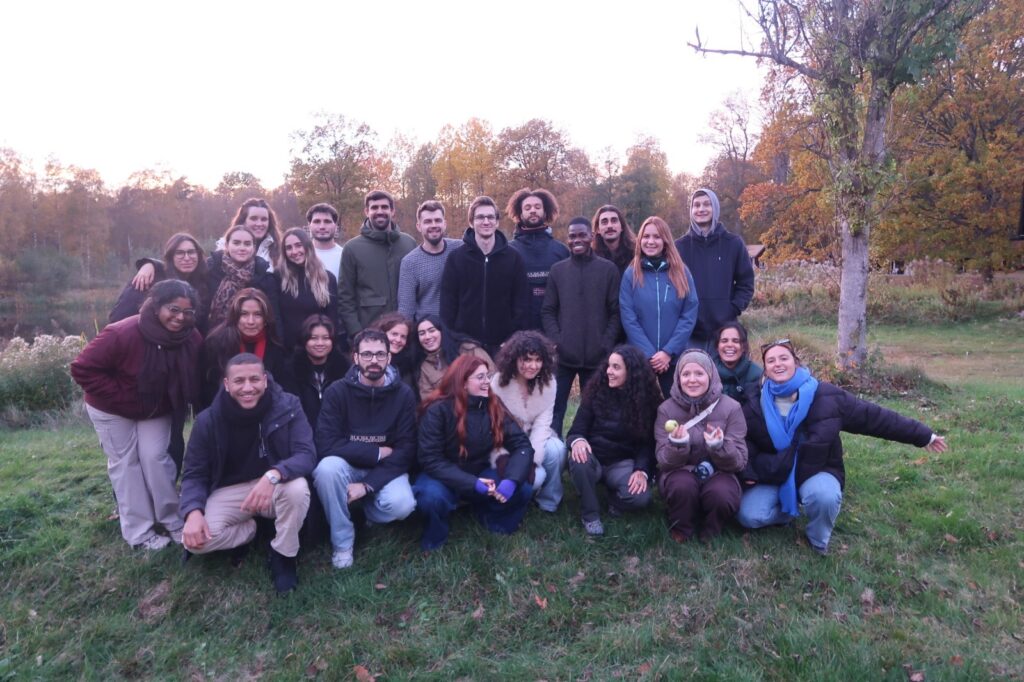
That is what the LOG OFF project was about. For a week, between October 16th and 23rd, 27 young adults met in Orrefors, Sweden, for a digital detox.
The project was developed in cooperation with organisations from Germany (CGE), Italy (Fondazione Toscana Sostenibile), Portugal (Quinta das Relvas), Spain (Sterna) and Sweden (Goodness of people).
The first day was all about introductions and building trust. First, we broke the ice with a powerhouse combo of teambuilding activities and tricks to remember the participants’ names. Then our host, Benita, showed us our venue in Orrefors and briefly introduced us to Swedish culture. Later, our trainers, Mariana and Dima, helped us share our fears, ambitions and expectations for the week. We ended with a goose chase, exploring the surroundings without using our smartphones or taking photos.
On the second day, our sessions focused on digital footprint, security and wellbeing. A debate about the active and passive forms of information allowed us to reflect critically on how, and when, we provide sensitive information. We also reviewed the European GDPR law, which protects our digital rights. In the next session, we explored other phenomena of our current times: cyberbullying, FOMO, unrealistic beauty standards, phone addiction and fake news deeply impact our generation. We concluded the day with a trip to the Loppis, the local thrift shop.
On Monday, our connection day, we had the chance to visit the nearby city of Kalmar. The participants had time to enjoy the city centre, the medieval castle and some shopping. It wasn’t all about fun, though: we were asked to engage with the locals, asking them about their own relationship with their smartphones and what tricks they had, if any, for disconnecting. We were all positively surprised by how friendly and warm Kalmar’s inhabitants were.

We spent most of the rest of the week outdoors, from the egg challenge and competitions to a nice hike around Orrefors’ lake. We really had the chance to practise mindfulness and introspection, and to connect with the other participants on a deeper level.
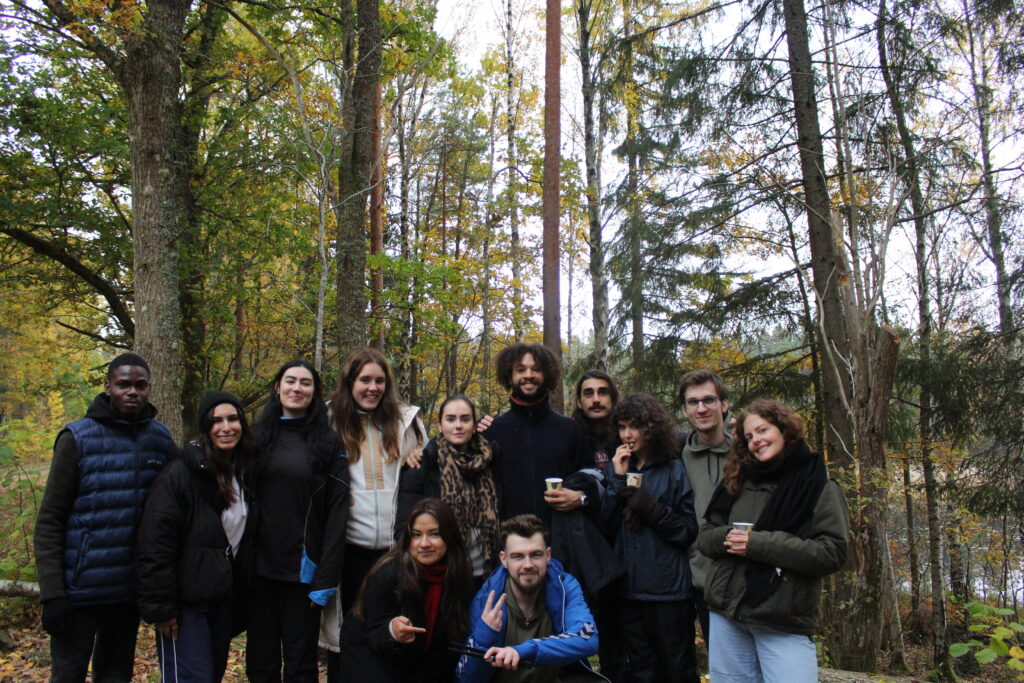
But LOG OFF wasn’t only about fun, nature and digital disconnection. The project was grounded in a local dimension, which we were welcomed to explore and interact with. Orrefors is world-famous for its glass museum: we had the pleasure of meeting the artists and discovering the secrets of glassblowing. We also shared an interesting dinner with the local chef, who migrated from the Netherlands and opened his restaurant here in Sweden. At the end of our stay, we were divided into groups and helped the locals with different community activities: some of us cleaned the football field, others tore down a house, and others cleaned the outdoor gym.


This project taught us that there’s a whole world of people, activities and connections when we leave our phones behind. Perhaps it’s not going to be easy to completely change our habits when it comes to digital devices, but it certainly feels less scary. At the end of the project, each participant received the youthpass, an evaluation certificate provided by the European Union.
The next phase of the project entails local actions in each partner country. Next spring, the 2nd Youth Exchange will take place in Lunigiana, Italy. To get ready for this next part, we developed a 30 days challenge calendar. In just a few, small, manageable daily activities, the participants will try to shift their own digital habits.
This project, LOG OFF: Strengthening Digital Well-Being Competences for a Healthier, More Balanced Youth Lifestyle (P.N. 2026-1-SE02-KA152-YOU-000390376) is co-funded by the European Commission through the Erasmus+ Program